



Find the best tutors and institutes for Class 12 Tuition
Q7.1:
Write IUPAC names of the following compounds:
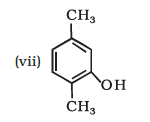
Write IUPAC names of the following compounds:
Solution :
Step 1: Analyzing the Molecular Structure
The provided chemical structure is a branched aliphatic alcohol: $CH_3-CH(CH_3)-CH_2-OH$.
To determine the IUPAC name, we must identify the longest carbon chain containing the principal functional group ($-OH$), assign numbering to ensure the lowest locant for the functional group, and identify substituents.
Step 2: Identifying the Principal Chain
The parent chain consists of 3 carbon atoms.
- $C_1$: The carbon atom attached to the $-OH$ group.
- $C_2$: The central carbon attached to the methyl substituent.
- $C_3$: The terminal methyl carbon.
Step 3: Determining Locants and Substituents
- Parent Alkane: Propane (3 carbons).
- Principal Functional Group: $-OH$ suffix is "-ol". It is located at $C_1$.
- Substituent: A methyl group ($-CH_3$) is attached to $C_2$.
Step 4: Constructing the IUPAC Name
The structure is composed of a 2-methyl substituted propane chain with an alcohol group at position 1. Combining these elements: 2-methylpropan-1-ol.
Analytical Summary Table
| Component | Identification |
|---|---|
| Parent Chain | Propane (3 carbons) |
| Functional Group | Alcohol ($-OH$) at $C_1$ |
| Substituent | Methyl ($-CH_3$) at $C_2$ |
| IUPAC Name | 2-Methylpropan-1-ol |
Final Solution: The IUPAC name of the compound is 2-Methylpropan-1-ol.
More Questions from Class 12 Chemistry Alcohols Exercises
- Q7.1: Write IUPAC names of the following compounds:
- Q7.1: Write IUPAC names of the following compounds:
- Q7.1: Write IUPAC names of the following compounds:
- Q7.1: Write IUPAC names of the following compounds:
- Q7.1: Write IUPAC names of the following compounds:
- Q7.1: Write IUPAC names of the following compounds:
- Q7.1: Write IUPAC names of the following compounds:
- Q7.1: Write IUPAC names of the following compounds:
- Q7.1: Write IUPAC names of the following compounds:
- Q7.1 (x): Write IUPAC names of the following compounds: \(C_{6}H_{5}–O–C_{2}H_{5}\)
- Q7.1 (xi): Write IUPAC names of the following compounds: \(C_{6}H_{5}–O–C_{7}H_{15}(n–)\)
- Q7.1(i): Write IUPAC names of the following compounds:
- Q7.1(ii): Write IUPAC names of the following compounds:
- Q7.1(iii): Write IUPAC names of the following compounds:
- Q7.1(iv): Write IUPAC names of the following compounds:
- Q7.1(ix): Write IUPAC names of the following compounds:
- Q7.1(v): Write IUPAC names of the following compounds:
- Q7.1(vi): Write IUPAC names of the following compounds:
- Q7.1(vii): Write IUPAC names of the following compounds:
- Q7.1(viii): Write IUPAC names of the following compounds:
- Q7.1(x): Write IUPAC names of the following compounds:
- Q7.1(xi): Write IUPAC names of the following compounds:
- Q7.1(xii): Write IUPAC names of the following compounds:
- Q7.10: Write chemical reaction for the preparation of phenol from chlorobenzene.
- Q7.10: Write chemical reaction for the preparation of phenol from chlorobenzene.
- Q7.11: Write the mechanism of hydration of ethene to yield ethanol.
- Q7.11: Write the mechanism of hydration of ethene to yield ethanol.
- Q7.12: You are given benzene, conc. \(H_{2}SO_{4}\) and \(NaOH\). Write the equations for the preparation of phenol using these reagents.
- Q7.12: You are given benzene, conc. ((H_{2}SO_{4})) and NaOH. Write the equations for the preparation of phenol using these reagents.
- Q7.13 (i): Show how will you synthesise: 1-phenylethanol from a suitable alkene.
- Q7.13 (ii): Show how will you synthesise: cyclohexylmethanol using an alkyl halide by an \(S_{N}2\) reaction.
- Q7.13 (iii): Show how will you synthesise: pentan-1-ol using a suitable alkyl halide?
- Q7.13(i): Show how will you synthesise: 1-phenylethanol from a suitable alkene.
- Q7.13(ii): Show how will you synthesise: cyclohexylmethanol using an alkyl halide by an ((S_{N}2)) reaction.
- Q7.13(iii): Show how will you synthesise: pentan-1-ol using a suitable alkyl halide?
- Q7.14: Give two reactions that show the acidic nature of phenol. Compare acidity of phenol with that of ethanol.
- Q7.14: Give two reactions that show the acidic nature of phenol. Compare acidity of phenol with that of ethanol.
- Q7.15: Explain why is ortho nitrophenol more acidic than ortho methoxyphenol ?
- Q7.15: Explain why is ortho nitrophenol more acidic than ortho methoxyphenol ?
- Q7.16: Explain how does the \(–OH\) group attached to a carbon of benzene ring activate it towards electrophilic substitution?
- Q7.16: Explain how does the –OH group attached to a carbon of benzene ring activate it towards electrophilic substitution?
- Q7.17 (i): Give equations of the following reactions: Oxidation of propan-1-ol with alkaline \(KMnO_{4}\) solution.
- Q7.17 (ii): Give equations of the following reactions: Bromine in \(CS_{2}\) with phenol.
- Q7.17 (iii): Give equations of the following reactions: Dilute \(HNO_{3}\) with phenol.
- Q7.17 (iv): Give equations of the following reactions: Treating phenol wih chloroform in presence of aqueous \(NaOH\).
- Q7.17(i): Give equations of the following reactions: Oxidation of propan-1-ol with alkaline ((KMnO_{4})) solution.
- Q7.17(ii): Give equations of the following reactions: Bromine in ((CS_{2})) with phenol.
- Q7.17(iii): Give equations of the following reactions: Dilute ((HNO_{3})) with phenol.
- Q7.17(iv): Give equations of the following reactions: Treating phenol wih chloroform in presence of aqueous NaOH.
- Q7.18 (i): Explain the following with an example. Kolbe’s reaction.
- Q7.18 (ii): Explain the following with an example. Reimer-Tiemann reaction.
- Q7.18 (iii): Explain the following with an example. Williamson ether synthesis.
- Q7.18 (iv): Explain the following with an example. Unsymmetrical ether.
- Q7.18(i): Explain the following with an example. Kolbe’s reaction.
- Q7.18(ii): Explain the following with an example. Reimer-Tiemann reaction.
- Q7.18(iii): Explain the following with an example. Williamson ether synthesis.
- Q7.18(iv): Explain the following with an example. Unsymmetrical ether.
- Q7.19: Write the mechanism of acid dehydration of ethanol to yield ethene.
- Q7.19: Write the mechanism of acid dehydration of ethanol to yield ethene.
- Q7.2 (i): Write structures of the compounds whose IUPAC names are as follows: 2-Methylbutan-2-ol
- Q7.2 (ii): Write structures of the compounds whose IUPAC names are as follows: 1-Phenylpropan-2-ol
- Q7.2 (iii): Write structures of the compounds whose IUPAC names are as follows: 3,5-Dimethylhexane –1, 3, 5-triol
- Q7.2 (iv): Write structures of the compounds whose IUPAC names are as follows: 2,3 – Diethylphenol
- Q7.2 (ix): Write structures of the compounds whose IUPAC names are as follows: Cyclopent-3-en-1-ol
- Q7.2 (v): Write structures of the compounds whose IUPAC names are as follows: 1 – Ethoxypropane
- Q7.2 (vi): Write structures of the compounds whose IUPAC names are as follows: 2-Ethoxy-3-methylpentane
- Q7.2 (vii): Write structures of the compounds whose IUPAC names are as follows: Cyclohexylmethanol
- Q7.2 (viii): Write structures of the compounds whose IUPAC names are as follows: 3-Cyclohexylpentan-3-ol
- Q7.2 (x): Write structures of the compounds whose IUPAC names are as follows: 4-Chloro-3-ethylbutan-1-ol.
- Q7.2(i): Write structures of the compounds whose IUPAC names are as follows: 2-Methylbutan-2-ol
- Q7.2(ii): Write structures of the compounds whose IUPAC names are as follows: 1-Phenylpropan-2-ol
- Q7.2(iii): Write structures of the compounds whose IUPAC names are as follows: 3,5-Dimethylhexane –1, 3, 5-triol
- Q7.2(iv): Write structures of the compounds whose IUPAC names are as follows: 2,3 – Diethylphenol
- Q7.2(ix): Write structures of the compounds whose IUPAC names are as follows: Cyclopent-3-en-1-ol
- Q7.2(v): Write structures of the compounds whose IUPAC names are as follows: 1 – Ethoxypropane
- Q7.2(vi): Write structures of the compounds whose IUPAC names are as follows: 2-Ethoxy-3-methylpentane
- Q7.2(vii): Write structures of the compounds whose IUPAC names are as follows: Cyclohexylmethanol
- Q7.2(viii): Write structures of the compounds whose IUPAC names are as follows: 3-Cyclohexylpentan-3-ol
- Q7.2(x): Write structures of the compounds whose IUPAC names are as follows: 4-Chloro-3-ethylbutan-1-ol.
- Q7.20 (i): How are the following conversions carried out? Propene \(\rightarrow\) Propan-2-ol.
- Q7.20 (ii): How are the following conversions carried out? Benzyl chloride \(\rightarrow\) Benzyl alcohol.
- Q7.20 (iii): How are the following conversions carried out? Ethyl magnesium chloride \(\rightarrow\) Propan-1-ol.
- Q7.20 (iv): How are the following conversions carried out? Methyl magnesium bromide \(\rightarrow\) 2-Methylpropan-2-ol.
- Q7.20(i): How are the following conversions carried out? Propene ((\rightarrow)) Propan-2-ol.
- Q7.20(ii): How are the following conversions carried out? Benzyl chloride ((\rightarrow)) Benzyl alcohol.
- Q7.20(iii): How are the following conversions carried out? Ethyl magnesium chloride ((\rightarrow)) Propan-1-ol.
- Q7.20(iv): How are the following conversions carried out? Methyl magnesium bromide ((\rightarrow)) 2-Methylpropan-2-ol.
- Q7.21 (i): Name the reagents used in the following reactions: Oxidation of a primary alcohol to carboxylic acid.
- Q7.21 (ii): Name the reagents used in the following reactions: Oxidation of a primary alcohol to aldehyde.
- Q7.21 (iii): Name the reagents used in the following reactions: Bromination of phenol to 2,4,6-tribromophenol.
- Q7.21 (iv): Name the reagents used in the following reactions: Benzyl alcohol to benzoic acid.
- Q7.21 (v): Name the reagents used in the following reactions: Dehydration of propan-2-ol to propene.
- Q7.21 (vi): Name the reagents used in the following reactions: Butan-2-one to butan-2-ol.
- Q7.21(i): Name the reagents used in the following reactions: Oxidation of a primary alcohol to carboxylic acid.
- Q7.21(ii): Name the reagents used in the following reactions: Oxidation of a primary alcohol to aldehyde.
- Q7.21(iii): Name the reagents used in the following reactions: Bromination of phenol to 2,4,6-tribromophenol.
- Q7.21(iv): Name the reagents used in the following reactions: Benzyl alcohol to benzoic acid.
- Q7.21(v): Name the reagents used in the following reactions: Dehydration of propan-2-ol to propene.
- Q7.21(vi): Name the reagents used in the following reactions: Butan-2-one to butan-2-ol.
- Q7.22: Give reason for the higher boiling point of ethanol in comparison to methoxymethane.
- Q7.22: Give reason for the higher boiling point of ethanol in comparison to methoxymethane.
- Q7.23: Give IUPAC names of the following ethers:
- Q7.23: Give IUPAC names of the following ethers:
- Q7.23: Give IUPAC names of the following ethers:
- Q7.23: Give IUPAC names of the following ethers:
- Q7.23: Give IUPAC names of the following ethers:
- Q7.23(i): Give IUPAC names of the following ethers:
- Q7.23(ii): Give IUPAC names of the following ethers:
- Q7.23(iii): Give IUPAC names of the following ethers:
- Q7.23(iv): Give IUPAC names of the following ethers:
- Q7.23(v): Give IUPAC names of the following ethers:
- Q7.23(vi): Give IUPAC names of the following ethers:
- Q7.24 (i): Write the names of reagents and equations for the preparation of the following ethers by Williamson’s synthesis: 1-Propoxypropane
- Q7.24 (ii): Write the names of reagents and equations for the preparation of the following ethers by Williamson’s synthesis: Ethoxybenzene
- Q7.24 (iii): Write the names of reagents and equations for the preparation of the following ethers by Williamson’s synthesis: 2-Methoxy-2-methylpropane
- Q7.24 (iv): Write the names of reagents and equations for the preparation of the following ethers by Williamson’s synthesis: 1-Methoxyethane
- Q7.24(i): Write the names of reagents and equations for the preparation of the following ethers by Williamson’s synthesis: 1-Propoxypropane
- Q7.24(ii): Write the names of reagents and equations for the preparation of the following ethers by Williamson’s synthesis: Ethoxybenzene
- Q7.24(iii): Write the names of reagents and equations for the preparation of the following ethers by Williamson’s synthesis: 2-Methoxy-2-methylpropane
- Q7.24(iv): Write the names of reagents and equations for the preparation of the following ethers by Williamson’s synthesis: 1-Methoxyethane
- Q7.25: Illustrate with examples the limitations of Williamson synthesis for the preparation of certain types of ethers.
- Q7.25: Illustrate with examples the limitations of Williamson synthesis for the preparation of certain types of ethers.
- Q7.26: How is 1-propoxypropane synthesised from propan-1-ol? Write mechanism of this reaction.
- Q7.26: How is 1-propoxypropane synthesised from propan-1-ol? Write mechanism of this reaction.
- Q7.27: Preparation of ethers by acid dehydration of secondary or tertiary alcohols is not a suitable method. Give reason.
- Q7.27: Preparation of ethers by acid dehydration of secondary or tertiary alcohols is not a suitable method. Give reason.
- Q7.28 (i): Write the equation of the reaction of hydrogen iodide with: 1-propoxypropane
- Q7.28 (ii): Write the equation of the reaction of hydrogen iodide with: methoxybenzene
- Q7.28 (iii): Write the equation of the reaction of hydrogen iodide with: benzyl ethyl ether.
- Q7.28(i): Write the equation of the reaction of hydrogen iodide with: 1-propoxypropane
- Q7.28(ii): Write the equation of the reaction of hydrogen iodide with: methoxybenzene
- Q7.28(iii): Write the equation of the reaction of hydrogen iodide with: benzyl ethyl ether.
- Q7.29: Explain the fact that in aryl alkyl ethers (i) the alkoxy group activates the benzene ring towards electrophilic substitution and (ii) it directs the incoming substituents to ortho and para positions in benzene ring.
- Q7.29: Explain the fact that in aryl alkyl ethers (i) the alkoxy group activates the benzene ring towards electrophilic substitution and (ii) it directs the incoming substituents to ortho and para positions in benzene ring.
- Q7.3 (i): Draw the structures of all isomeric alcohols of molecular formula \(C_{5}H_{12}O\) and give their IUPAC names.
- Q7.3 (ii): Classify the isomers of alcohols as primary, secondary and tertiary alcohols.
- Q7.3(i): Draw the structures of all isomeric alcohols of molecular formula ((C_{5}H_{12}O)) and give their IUPAC names.
- Q7.3(ii): Classify the isomers of alcohols as primary, secondary and tertiary alcohols.
- Q7.30: Write the mechanism of the reaction of \(HI\) with methoxymethane.
- Q7.30: Write the mechanism of the reaction of HI with methoxymethane.
- Q7.31 (i): Write equations of the following reactions: Friedel-Crafts reaction – alkylation of anisole.
- Q7.31 (ii): Write equations of the following reactions: Nitration of anisole.
- Q7.31 (iii): Write equations of the following reactions: Bromination of anisole in ethanoic acid medium.
- Q7.31 (iv): Write equations of the following reactions: Friedel-Craft’s acetylation of anisole.
- Q7.31(i): Write equations of the following reactions: Friedel-Crafts reaction – alkylation of anisole.
- Q7.31(ii): Write equations of the following reactions: Nitration of anisole.
- Q7.31(iii): Write equations of the following reactions: Bromination of anisole in ethanoic acid medium.
- Q7.31(iv): Write equations of the following reactions: Friedel-Craft’s acetylation of anisole.
- Q7.32: Show how would you synthesise the following alcohols from appropriate alkenes?
- Q7.32: Show how would you synthesise the following alcohols from appropriate alkenes?
- Q7.32: Show how would you synthesise the following alcohols from appropriate alkenes?
- Q7.32: Show how would you synthesise the following alcohols from appropriate alkenes?
- Q7.32(i): Show how would you synthesise the following alcohols from appropriate alkenes?
- Q7.32(ii): Show how would you synthesise the following alcohols from appropriate alkenes?
- Q7.32(iii): Show how would you synthesise the following alcohols from appropriate alkenes?
- Q7.32(iv): Show how would you synthesise the following alcohols from appropriate alkenes?
- Q7.33: When 3-methylbutan-2-ol is treated with HBr, the following reaction takes place: Give a mechanism for this reaction. (Hint : The secondary carbocation formed in step II rearranges to a more stable tertiary carbocation by a hydride ion shift from 3rd carbon atom.
- Q7.33: When 3-methylbutan-2-ol is treated with HBr, the following reaction takes place: Give a mechanism for this reaction. (Hint : The secondary carbocation formed in step II rearranges to a more stable tertiary carbocation by a hydride ion shift from ((3^{rd})) carbon atom.)
- Q7.4: Explain why propanol has higher boiling point than that of the hydrocarbon, butane?
- Q7.4: Explain why propanol has higher boiling point than that of the hydrocarbon, butane?
- Q7.5: Alcohols are comparatively more soluble in water than hydrocarbons of comparable molecular masses. Explain this fact.
- Q7.5: Alcohols are comparatively more soluble in water than hydrocarbons of comparable molecular masses. Explain this fact.
- Q7.6: What is meant by hydroboration-oxidation reaction? Illustrate it with an example.
- Q7.6: What is meant by hydroboration-oxidation reaction? Illustrate it with an example.
- Q7.7: Give the structures and IUPAC names of monohydric phenols of molecular formula, \(C_{7}H_{8}O\).
- Q7.7: Give the structures and IUPAC names of monohydric phenols of molecular formula, ((C_{7}H_{8}O)).
- Q7.8: While separating a mixture of ortho and para nitrophenols by steam distillation, name the isomer which will be steam volatile. Give reason.
- Q7.8: While separating a mixture of ortho and para nitrophenols by steam distillation, name the isomer which will be steam volatile. Give reason.
- Q7.9: Give the equations of reactions for the preparation of phenol from cumene.
- Q7.9: Give the equations of reactions for the preparation of phenol from cumene.
CBSE Solutions for Class 12 Chemistry Alcohols
Chapters in CBSE - Class 12 Chemistry
Top Tutors who teach Alcohols

 Top Tutor
 Kalyan Nagar, Bangalore
 12 yrs of
Exp
 200
per hour
 Online Classes
I have 14 years experience in hindi tuition , lots of student passed out in hindi with 90+. 9th - 12th all types of syllabus handled . Bangalore colleges like frank's, clarence , carmel, cmr, royal concorde , delhi public , charles and other schools. Online classes anywhere in india .
 Top Tutor
R - Block, Kovaipudur
20 yrs of
Exp
 16 students
 296 hrs of classes completed
500
per hour
Online Classes
I have 21 years of experience in teaching chemistry and training the students for both board and competitive exams.
 Top Tutor
Tollygunge, Kolkata
5 yrs of
Exp
3 students
38 hrs of classes completed
800
per hour
Online Classes
I have been giving tuitions to Class 12 students since October 2015. I was then in 2nd year of BSc Physics from the renowned 200 years old university, Presidency University. In total I taught 2 Class 12 students in Kolkata and 9 Class 12 students in Delhi. Currently I am teaching a Class 11 student from JNU Quarters Maths, Physics and Chemistry via Zoom app. I have whiteboard, colourful pens and other requirements to ease the teaching in a great way.
 Top Tutor
Domalguda, Hyderabad
2 yrs of
Exp
3 students
80 hrs of classes completed
299
per hour
Online Classes
 Tutor's home
I am accountancy tutor with teaching experience of 2yrs.i come from a very strong commerce background and I have passion towards accountancy teaching .I would like to solve challenging problems that students face in this field.
Shes a very good tutor and answered my doubts at any time even if it’s late or early. Definitely would recommend her.

 Super Tutor
Sector 59 E Block, Noida
6 yrs of
Exp
104 students
4775 hrs of classes completed
300
per hour
Online Classes
In my role as a teacher for Class 12, I've had the privilege of fostering a dynamic and engaging learning environment. Utilizing a combination of traditional teaching methods and modern technology, I've been able to ensure that students remain both interested and challenged. I've consistently strived to create a classroom atmosphere that promotes curiosity and encourages students to ask questions, facilitating a deeper understanding of the subject matter. As a Class 12th mentor, my goal has been to equip students not only with academic knowledge but also with the skills necessary for their future endeavors.
Very good teacher, the explanation was nice, i was able to understand all the little concepts that too in a short span of time.



