Hello, What is the difference between Academic and General Training? Let me know. Regards Manshi

Asked by Last Modified  

47 Answers

Follow 1
Answer

Please enter your answer

Academic ,Reading will be really longer compared to general
Comments

Academic for studies purpose, General for Migration purpose
Comments

Highly proficient English trainer/tutor/Overseas career adviser

The listening and Speaking sections remain the same in both, however, the reading section is a bit easier, containing 3 sections, and the writing section in which, one has to do attempt two writing tasks. Task 1 is a letter, ALWAYS, either of formal, semi-formal or Informal style and Task 2 consists...
read more
The listening and Speaking sections remain the same in both, however, the reading section is a bit easier, containing 3 sections, and the writing section in which, one has to do attempt two writing tasks. Task 1 is a letter, ALWAYS, either of formal, semi-formal or Informal style and Task 2 consists of a 40 mins essay wherein the student is asked to present his opinions/views and present them in an essay style. read less
Comments

Academic ,Reading will be really longer compared to general.
Comments

If one wants to present the IELTS score to an institute for further studies abroad, one has to take up ACADEMIC MODULE. otherwise general module score is accepted for job/ migration etc purposes
Comments

IELTS and PTE trainer

Academic exam is written by students who go for higher studies whereas general is written by professionals who wish to settle abroad for pr purpose besides this even people who apply for a job or for dependent visas one should write general. the main difference in the exam is in reading for academic...
read more
Academic exam is written by students who go for higher studies whereas general is written by professionals who wish to settle abroad for pr purpose besides this even people who apply for a job or for dependent visas one should write general. the main difference in the exam is in reading for academic they give 3 passages and 40 questions the length of three passage can range from 2000 to 2750 words that is why academic reading appears to be difficult they give 13 to14 question in each passage and overall time is one hr . in general the reading comprises of advertisement sets and passage which are comparatively smaller than academic reading may e maximum of 1800 words or less .time is same 1 hr. evaluation is strict for general exam. in writing academic and general both have 1 hr two tasks to be written in general test they asks you to write a letter for task 1 (formal or informal ) in academic they ask you to write a report on a given diagram task will be an essay for both academic and general for 40 mins. read less
Comments

You have a choice of two versions of IELTS: Academic or General Training. Everybody takes the same Listening and Speaking components. It is the Reading and Writing components that differ. You will take the Listening, Reading and Writing tests all on the same day one after the other, with no breaks...
read more
You have a choice of two versions of IELTS: Academic or General Training. Everybody takes the same Listening and Speaking components. It is the Reading and Writing components that differ. You will take the Listening, Reading and Writing tests all on the same day one after the other, with no breaks in between them. Your Speaking test will either be after a break on the same day as the other three tests, or up to seven days before or after that. This will depend on your test centre. read less
Comments

Academic for studies purpose, General for Migration purpose.
Comments

Expert training in spoken hindi english ,ielts , gre/gmat training and counseling.

There is often a lot of confusion for people first encountering IELTS, regarding how the academic and general training modules differ. This is important to know as it can affect candidates' choice of practice strategy and choice of IELTS practice tests. Let's begin with the areas of the academic and...
read more
There is often a lot of confusion for people first encountering IELTS, regarding how the academic and general training modules differ. This is important to know as it can affect candidates' choice of practice strategy and choice of IELTS practice tests. Let's begin with the areas of the academic and general training modules that are the same. These are the listening and speaking sections. The listening section of the test consists of four parts with four separate recording sections. There are ten questions for each recording section and so forty questions in total. The key thing to realise when starting to practice the IELTS speaking test is that candidates only get to hear the recording once. The listening test should last for around thirty minutes. Go to our tutorials to read something about strategies to deal with the IELTS listening test. The speaking section is also the same for academic and general training modules. It is in three parts and should last for around eleven to fourteen minutes. A single candidate has a one to one converstation with a single examiner and the conversation is recorded. The three parts are a conversation on topics of general interest (4 - 5 minutes), a longer turn when the candidate must speak on her/his own for one to two minutes (3 - 4 minutes), and finally another conversation on more demanding topics and with more demanding questions (4 - 5 minutes).Go to our tutorials to read something about strategies to deal with the IELTS speaking test. The reading test is different for the academic and general training modules. The academic reading consists of three long reading passages with around thirteen or fourteen questions for each reading passage. There are forty questions in total and candidates have one hour to complete the test. The texts are more academically orientated than the general training texts. The general training reading test is also in three sections and it also lasts an hour. Section one has two or three texts and they will be on subjects that tests a candidates to operate in an English environment. Section two is on training or work topics and there are also two texts. Section three has one longer text. Like the academic reading, there are around thirteen or fourteen questions for each reading section and there are forty questions in total. Go to our tutorials to read something about strategies to deal with the IELTS reading tests. Finally, there is the writing test. Both the academic and general training writing tests have two sections and students are advised to spend twenty minutes on section 1 and forty minutes on section 2, making one hour in total. In the academic writing test, section 1 asks candidates to describe the information (more than 150 words) presented in some kind of graphic or image. This is often a pie chart, a line graph, a table, a bar chart or a representation of a process. Often combinations of charts are given. In section two academic, candidates have to to write a short essay (more than 250 words) on a topic of general interest. In the general training writing test, section 1 requires candidates to write a short letter (more than 150 words) in response to some information presented. Section 2 is very similar (though different questions) to the academic writing and have to to write a short essay (more than 250 words) on a topic of general interest. Go to our tutorials to read something about strategies to deal with the IELTS writing tests. The academic module of IELTS is mainly aimed at students who wish to study in a university that operates its courses in English. However, some people who emigrate or wish to work in an English speaking environment may be required to do the academic module. The general training module of IELTS is aimed mainly at people who wish to emigrate to an English speaking country, but who probably won't work in a technical job. The only way candidates can be truly sure of which module to take is to ask the organisation that requires them to take IELTS, i.e., an immigration authority or a university. Knowing which module a candidate is taking is vital, so that the correct IELTS practice tests are found and the correct preparation strategy formulated. read less
Comments

Tutor

In General IELTS Reading and writing is easier and is normally used for non educational purposes.
Comments

View 45 more Answers

Related Questions

Is coaching needed for the IELTS?
Having a mentor or guide always makes things easier, but you can also work hard without coaching, for that you'll have to prepare a timetable and remain consistent with your preperation.
Mohd Rayyan
0 0
6
Can I ask examiner to repeat the question in IELTS speaking test?
yes u can but don't ask again and again as it can create a negative impact.
Gene
0 0
5
What app do you usually use to practice spoken English?
Any of the english speaking apps are of no use. You have to actually start reading books and read the dictionary.
Amanbir
0 0
5
Hello suggest me best ielts coaching centre
No centre is best till u don't participate with perseverance and determination . Each section becomes easy as u enjoy this as a language ,instead of exam. u can contact me for further information.
Sudhakar

Now ask question in any of the 1000+ Categories, and get Answers from Tutors and Trainers on UrbanPro.com

Ask a Question

Related Lessons

FastTrack IELTS classes and Aviation Hospitality and Tourism
I have coached several students for the IELTS exam, and many have scored 8+! My students have successfully cleared the IELTS exam with improved scores through personalized guidance and targeted practice. ...

IELTS Speaking Part 1 Ten Things to Remember by Arun Anand IELTS Trainer Trivandrum
The first part of the IELTS speaking test is called the warm up session.As soon as the examiner has introduced himself/herself and verified your identity the first part of the test begins.It is very important...

Verbs : English Grammar
Verbs: Types of verbs : Action verbs Auxiliary verbs Finite Non-finite Irregular verbs Main verbs Modal verb Mood Phrasal verbs Regular verbs Stative...

IELTS Sample Essay # 2 (Advantages & Disadvantages)
The influence of social media has increased many folds in people’s lives. Discuss the advantages and disadvantages of this phenomenon. The impact of social media has indeed increased tremendously...

IELTS Speaking test tip
NEVER ask the examiner how you have done. He/she cannot tell you.
G

Recommended Articles

The hard work, the tight schedule, the mock test -- all comes to an end on the IELTS exam day. What you used to mark on the calendar, finally arrives and the pressure to put in your best effort is the biggest challenge. While loved ones wish you luck, you just try to recall all that you have prepared so far. In the hustle...

Read full article >

Preparing for the IELTS exam? It is important to be aware of the rules and regulations of the test day. Be ready for the test day in advance to give your best performance. Below are few tips listed for IELTS test takers: Be prepared and on time Don’t just wait to sort out things till the last minute. Start preparing...

Read full article >
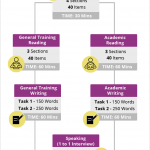
International English Language Testing System (IELTS) is a standardized test to evaluate English language proficiency (both written and oral) in non-native English speakers. There are 2 different versions of the test - Academic Version and General Training Version. Each of the versions is intended for different purposes,...

Read full article >

IELTS -- International English Language Testing System is one of the prerequisites that need to be completed if you want to work or study abroad. It evaluates your understanding of the usage of English language and measures your proficiency with the use of the English language. IELTS exam comprises of four sections- listening,...

Read full article >

Looking for IELTS Coaching classes?

Learn from the Best Tutors on UrbanPro

Are you a Tutor or Training Institute?

Join UrbanPro Today to find students near you