



Find the best tutors and institutes for Class 11 Tuition
Q9.12(i):
Explain why the following systems are not aromatic?
(i) 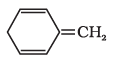
Explain why the following systems are not aromatic?
(i)
Solution :
Analysis of Aromaticity Requirements
To determine the aromaticity of a cyclic system, we apply Hückel's Rule ($4n+2$ $\pi$-electrons) alongside the structural requirements of planarity, complete conjugation, and cyclic delocalization. The specific system provided, cyclooctatetraene ($C_8H_8$), must be evaluated against these criteria.
Step 1: Structural Evaluation
The molecule in question is cyclooctatetraene. We count the number of $\pi$-electrons involved in the conjugation:
- Number of double bonds = 4
- Each double bond contributes 2 $\pi$-electrons.
- Total $\pi$-electrons = $4 \times 2 = 8$ electrons.
Step 2: Testing against Hückel’s Rule
According to Hückel's Rule, a planar, cyclic system is aromatic if it contains $(4n + 2)$ $\pi$-electrons, where $n$ is an integer ($n = 0, 1, 2, \dots$).
Setting the total $\pi$-electrons equal to the Hückel expression:
$4n + 2 = 8$
$4n = 6$
$n = 1.5$
[Justification: Since $n$ must be an integer, the molecule does not satisfy Hückel's Rule for aromaticity. Instead, it follows the $4n$ rule ($8 = 4 \times 2$), classifying it as anti-aromatic if it were planar.]
Step 3: Geometric Configuration
While the molecule possesses $8$ $\pi$-electrons, which would theoretically make it anti-aromatic and highly unstable if planar, the system avoids this instability by adopting a "tub-shaped" (non-planar) conformation. In this geometry, the $p$-orbitals are not perfectly aligned to allow for full continuous cyclic delocalization.
Step 4: Conclusion of Aromaticity Status
The system fails the requirements for aromaticity due to two primary factors:
- Electron Count: It contains $8\pi$-electrons, which does not fit the $(4n+2)$ criterion [Per Hückel's Rule].
- Geometry: It is non-planar. Aromaticity requires a planar system to ensure effective overlap of $p$-orbitals for cyclic delocalization [By structural criteria of aromatic systems].
Final Solution: The system is non-aromatic because it does not follow the $4n+2$ Hückel rule (having $8\pi$-electrons) and maintains a non-planar "tub" conformation that prevents cyclic delocalization of the $\pi$-electron cloud.
More Questions from Class 11 Chemistry Hydrocarbons EXERCISES
- Q9.1: How do you account for the formation of ethane during chlorination of methane ?
- Q9.10: Why is benzene extra ordinarily stable though it contains three double bonds?
- Q9.11: What are the necessary conditions for any system to be aromatic?
- Q9.12(ii): Explain why the following systems are not aromatic? (ii)
- Q9.12(iii): Explain why the following systems are not aromatic? (iii)
- Q9.13(i): How will you convert benzene into (i) p-nitrobromobenzene
- Q9.13(ii): How will you convert benzene into (ii) m- nitrochlorobenzene
- Q9.13(iii): How will you convert benzene into (iii) p - nitrotoluene
- Q9.13(iv): How will you convert benzene into (iv) acetophenone?
- Q9.14: In the alkane $H_3C – CH_2 – C(CH_3)_2 – CH_2 – CH(CH_3)_2$, identify $1^\circ,2^\circ,3^\circ$ carbon atoms and give the number of $H$ atoms bonded to each one of these.
- Q9.15: What effect does branching of an alkane chain has on its boiling point?
- Q9.16: Addition of HBr to propene yields 2-bromopropane, while in the presence of benzoyl peroxide, the same reaction yields 1-bromopropane. Explain and give mechanism.
- Q9.17: Write down the products of ozonolysis of 1,2-dimethylbenzene (o-xylene). How does the result support Kekulé structure for benzene?
- Q9.18: Arrange benzene, n-hexane and ethyne in decreasing order of acidic behaviour. Also give reason for this behaviour.
- Q9.19: Why does benzene undergo electrophilic substitution reactions easily and nucleophilic substitutions with difficulty?
- Q9.2(a): Write IUPAC names of the following compounds : (a) $CH_3CH=C(CH_3)_2$
- Q9.2(b): Write IUPAC names of the following compounds : (b) $CH_2=CH-C \equiv C-CH_3$
- Q9.2(c): Write IUPAC names of the following compounds : (c)
- Q9.2(d): Write IUPAC names of the following compounds : (d)
- Q9.2(e): Write IUPAC names of the following compounds : (e)
- Q9.2(f): Write IUPAC names of the following compounds : (f) $CH_3(CH_2)_4 CH (CH_2)_3 CH_3$ with a $CH_2–CH(CH_3)_2$ group attached to the CH.
- Q9.2(g): Write IUPAC names of the following compounds : (g) $CH_3 – CH = CH – CH_2 – CH = CH – CH – CH_2 – CH = CH_2$ with a $C_2H_5$ group attached to the third CH from the left.
- Q9.20(i): How would you convert the following compounds into benzene? (i) Ethyne
- Q9.20(ii): How would you convert the following compounds into benzene? (ii) Ethene
- Q9.20(iii): How would you convert the following compounds into benzene? (iii) Hexane
- Q9.21: Write structures of all the alkenes which on hydrogenation give 2-methylbutane.
- Q9.22(a): Arrange the following set of compounds in order of their decreasing relative reactivity with an electrophile, $E^+$ (a) Chlorobenzene, 2,4-dinitrochlorobenzene, p-nitrochlorobenzene
- Q9.22(b): Arrange the following set of compounds in order of their decreasing relative reactivity with an electrophile, $E^+$ (b) Toluene, $p-H_3C – C_6H_4 – NO_2$, $p-O_2N – C_6H_4 – NO_2$.
- Q9.23: Out of benzene, m–dinitrobenzene and toluene which will undergo nitration most easily and why?
- Q9.24: Suggest the name of a Lewis acid other than anhydrous aluminium chloride which can be used during ethylation of benzene.
- Q9.25: Why is Wurtz reaction not preferred for the preparation of alkanes containing odd number of carbon atoms? Illustrate your answer by taking one example.
- Q9.3(a): For the following compounds, write structural formulas and IUPAC names for all possible isomers having the number of double or triple bond as indicated : (a) $C_4H_8$ (one double bond)
- Q9.3(b): For the following compounds, write structural formulas and IUPAC names for all possible isomers having the number of double or triple bond as indicated : (b) $C_5H_8$ (one triple bond)
- Q9.4(i): Write IUPAC names of the products obtained by the ozonolysis of the following compounds : (i) Pent-2-ene
- Q9.4(ii): Write IUPAC names of the products obtained by the ozonolysis of the following compounds : (ii) 3,4-Dimethylhept-3-ene
- Q9.4(iii): Write IUPAC names of the products obtained by the ozonolysis of the following compounds : (iii) 2-Ethylbut-1-ene
- Q9.4(iv): Write IUPAC names of the products obtained by the ozonolysis of the following compounds : (iv) 1-Phenylbut-1-ene
- Q9.5: An alkene ‘A’ on ozonolysis gives a mixture of ethanal and pentan-3-one. Write structure and IUPAC name of ‘A’.
- Q9.6: An alkene ‘$A$’ contains three $C – C$, eight $C – H$ $\sigma$ bonds and one $C – C$ $\pi$ bond. ‘$A$’ on ozonolysis gives two moles of an aldehyde of molar mass 44 u. Write IUPAC name of ‘$A$’.
- Q9.7: Propanal and pentan-3-one are the ozonolysis products of an alkene? What is the structural formula of the alkene?
- Q9.8(i): Write chemical equations for combustion reaction of the following hydrocarbons: (i) Butane
- Q9.8(ii): Write chemical equations for combustion reaction of the following hydrocarbons: (ii) Pentene
- Q9.8(iii): Write chemical equations for combustion reaction of the following hydrocarbons: (iii) Hexyne
- Q9.8(iv): Write chemical equations for combustion reaction of the following hydrocarbons: (iv) Toluene
- Q9.9: Draw the cis and trans structures of hex-2-ene. Which isomer will have higher b.p. and why?
CBSE Solutions for Class 11 Chemistry Hydrocarbons
Chapters in CBSE - Class 11 Chemistry
Top Tutors who teach Hydrocarbons

 Top Tutor
 Manimajra, Panchkula
 8 yrs of
Exp
 2 students
 20 hrs of classes completed
 500
per hour
 Online Classes
 Student's Home
 Tutor's home
I am a commerce teacher. Giving home tuitions since 2014. I have degree in M. Com and B. Ed and also certified in CTET ..
 Top Tutor
Govindpuram D-Block, Ghaziabad
1 yrs of
Exp
Online Classes
I am an experienced, enthusiastic and well focused Teacher and I am giving home tuition since 2018. I am certified in B1. I also have a degree in B1. My key skills are Hardworking, Determined and Passionate. My accomplishments are Topper in A1 level, Class topper of Class 12 th and 1 st rank in College. I like to read novels in my free time and I want to promote education and well-being of children at all times. Always engaged in continuous learning in order to broaden my Knowledge and Experience.



 Super Tutor
Sector 83, Gurgaon
20 yrs of
Exp
34 students
5002 hrs of classes completed
700
per hour
Online Classes
Tutor's home
With 26 years of extensive experience in teaching mathematics, I specialize in instructing students from grades 9 through 12 across various boards, including CBSE, ICSE, and State Boards. My academic qualifications include a BSc, BTech in Mathematics, MSc, BEd, and I am currently pursuing a PhD. This strong educational background, coupled with my long-standing commitment to teaching, has allowed me to develop a comprehensive approach to mathematics education. I have held prestigious positions as a College Associate Professor at esteemed institutions such as Ganga Institute of Technology and Management, VAISH College, and BLS University. My dedication to teaching has been recognized with the Best Teacher Award from both VAISH College and Ganga Institute of Technology and Management. These accolades reflect my commitment to delivering high-quality education and fostering academic excellence in my students. Currently, I run my own offline center where I conduct mathematics classes for students in grades 9 through 12. In addition to my offline classes, I also offer online sessions to provide flexible learning options. My teaching methods involve practical sessions using a whiteboard to facilitate a clear and engaging learning experience. I emphasize the importance of regular assessments, providing my students with notes, assignments, and weekly tests to track their progress and ensure thorough understanding. My approach to teaching mathematics is rooted in practical application and interactive learning. By focusing on real-world problems and fostering a supportive learning environment, I aim to help students build a strong foundation in mathematics, achieve academic success, and develop a lifelong appreciation for the subject.
Very patient teacher who makes maths easy and manageable. Fear factor of this subject is completely removed by her . Very competent indeed .
 Top Tutor
Jayanagar 4th block, Bangalore
11 yrs of
Exp
1 student
291 hrs of classes completed
400
per hour
Online Classes
- Helping the student gain confidence in themselves and with respect to the subject. - Thorough preparation with the help of model and previous year question papers. - Understanding the student's learning style and adapting my teaching style accordingly. - Making lessons interesting by using different methods of teaching (Sharing relevant YouTube links and weblinks).
I like the faculty and I feel I had the best environment for my studies . I learned the new things from my teachers who were very helpful in every way they could. You have been a great lecturer to me, and I fully enjoyed your lectures, you explained everything in detail about the media and early childhood education and way of storytelling etc, referring the notes given to us , it made it easier for me to understand. I'm beyond thankful to have you as one of my lecturer in my Masters. Thank you
 Top Tutor
Edapally, Kochi
1 yrs of
Exp
48 hrs of classes completed
500
per hour
Online Classes
Student's Home
Tutor's home
Qualified french teacher and tutor with a master degree in french from delhi university. Working as a language expert in ernst and young. Qualified. Have 4 years of teaching experience. With c1 certification.



