




What is dyslexia?
Asked by Abhinav Last Modified

Follow 1 
 Answer
Sadika
Dyslexia is a specific learning disability that primarily affects a person's ability to read, spell, and write, despite having average to above-average intelligence and receiving adequate instruction. Dyslexia is a neurological condition that involves difficulties with accurate and/or fluent word...
read more Dyslexia is a specific learning disability that primarily affects a person's ability to read, spell, and write, despite having average to above-average intelligence and receiving adequate instruction. Dyslexia is a neurological condition that involves difficulties with accurate and/or fluent word recognition and by poor spelling and decoding abilities. Key characteristics of dyslexia include: Difficulty with Phonological Processing: Individuals with dyslexia often struggle with phonological processing, which involves recognizing and manipulating the sounds of spoken language. This difficulty can affect the ability to associate letters with their corresponding sounds. Difficulty with Word Recognition: Dyslexia can lead to challenges in accurately and quickly recognizing words. Individuals with dyslexia may experience difficulties with decoding (breaking down words into sounds) and encoding (spelling words based on their sounds). Difficulty with Spelling: Spelling difficulties are a common feature of dyslexia. Individuals may have trouble with the correct sequence of letters in words and may rely on memorization rather than applying consistent spelling rules. Reading Comprehension Challenges: While dyslexia primarily affects word-level reading skills, it can also impact reading comprehension. Individuals may struggle to understand and retain information from written texts. Slow and Labored Reading: Reading for individuals with dyslexia may be slow and laborious. They may experience difficulties with fluency, resulting in word-by-word reading rather than smooth, continuous reading. Difficulty Learning to Read: Dyslexia often becomes apparent when a child begins learning to read. Despite instruction and practice, a child with dyslexia may show persistent difficulties in acquiring reading skills at the expected rate. Letter Reversals and Transpositions: Letter reversals (e.g., confusing "b" and "d") and transpositions (e.g., mixing up the order of letters in a word) are common in individuals with dyslexia, especially during early stages of reading development. It's important to note that dyslexia is not related to intelligence. Individuals with dyslexia can have average to above-average intelligence and may excel in areas not directly related to reading. Dyslexia is a lifelong condition, but with early identification and appropriate interventions, individuals with dyslexia can develop effective strategies and succeed academically. Interventions for dyslexia often involve specialized, structured literacy instruction that addresses the phonological component of language. Additionally, accommodations and assistive technologies can support individuals with dyslexia in their academic and professional pursuits. Early detection and intervention are key to helping individuals with dyslexia overcome challenges and reach their full potential. read less
0
Comments
Related Questions
Define "Self Confidence" 
1809: born on Feb 12 1816: He was forced out of his home and he had to work to support his family 1818: HIs mother passed away 1828: his sister passed away 1831: His business venture failed 1832:...

 23
23Now ask question in any of the 1000+ Categories, and get Answers from Tutors and Trainers on UrbanPro.com
Ask a QuestionRelated Lessons
Lesson plan is based on the developing addition skills. It will help students to add the numbers
Common Core Standards: Algebraic Thinking Represent and solve problems involving addition and subtraction problems Understand and apply properties of operations and the relationship...

Lesson plan is based on the reading skills. It will help students to blend the letters to make words
Objectives 1. Students will be able to visually and aurally distinguish between the target single letters Aa, Bb, and Cc. 2. Students will be able to recognize and classify nine words according...
How we learn, Innovate, Socialise and Feel Compassion
Strangely enough all these things - learning, innovating, socialising and feeling compassion - have a common base called the Social Engagement System. Do you remember Dr Abdul Kalam the former President...

What does a Remedial Teacher do?
A remedial teacher is a person who helps children facing difficulties in academics to catch up with their peers. Difficulties in academics and drop in grade occur due to one or more difficulties such...
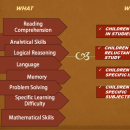
Signs of learning Disabilities
The symptoms of learning disabilities are a diverse set of characteristics which affect development and achievement. Some of these symptoms can be found in all individuals at some time during their development....

Find Special Education (Learning Disabilities) Classes near you
Looking for Special Education (Learning Disabilities) Classes?
Learn from the Best Tutors on UrbanPro
Are you a Tutor or Training Institute?
Join UrbanPro Today to find students near you



