What is a DevOps ToolChain?

Asked by Last Modified  

1 Answer

Follow 1
Answer

Please enter your answer

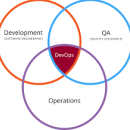
A DevOps toolchain refers to a set or combination of tools that are integrated and orchestrated to facilitate and automate the various stages of the software development lifecycle (SDLC) within a DevOps framework. The goal of a DevOps toolchain is to streamline and automate processes, improve collaboration...
read more
A DevOps toolchain refers to a set or combination of tools that are integrated and orchestrated to facilitate and automate the various stages of the software development lifecycle (SDLC) within a DevOps framework. The goal of a DevOps toolchain is to streamline and automate processes, improve collaboration between development and operations teams, and enhance the overall efficiency of software delivery. The toolchain spans from code development and testing to deployment, monitoring, and feedback. Key components of a typical DevOps toolchain include: Version Control: Examples: Git, SVN Purpose: Manages and tracks changes to the source code, enabling collaboration among development teams and providing version history. Continuous Integration (CI): Examples: Jenkins, GitLab CI, Travis CI Purpose: Automates the process of integrating code changes from multiple contributors and triggers automated builds and tests whenever changes are pushed to the version control system. Code Quality and Static Analysis: Examples: SonarQube, ESLint, Checkstyle Purpose: Analyzes code for quality, identifies potential issues, and enforces coding standards. Helps maintain a high level of code quality. Package Management: Examples: npm, Maven, NuGet Purpose: Manages dependencies and packages required for building and running applications. Ensures consistent and reproducible builds. Artifact Repository: Examples: Nexus, JFrog Artifactory Purpose: Stores and manages binary artifacts (e.g., compiled code, libraries) produced during the build process. Provides a centralized location for artifact storage and retrieval. Continuous Deployment (CD): Examples: Ansible, Puppet, Chef Purpose: Automates the deployment and configuration of applications and infrastructure. Ensures consistent and repeatable deployments across different environments. Containerization and Orchestration: Examples: Docker, Kubernetes Purpose: Enables the packaging of applications and their dependencies into containers for consistent deployment across various environments. Orchestrates containerized applications for scalability and management. Infrastructure as Code (IaC): Examples: Terraform, Ansible, Chef, Puppet Purpose: Defines and manages infrastructure configurations using code, allowing for automated provisioning and configuration of infrastructure resources. Monitoring and Logging: Examples: Prometheus, Grafana, ELK stack (Elasticsearch, Logstash, Kibana) Purpose: Monitors application and infrastructure health, collects and analyzes logs, and provides insights into performance and issues. Collaboration and Communication: Examples: Slack, Microsoft Teams Purpose: Facilitates communication and collaboration between development and operations teams. Integrates with other tools to provide real-time notifications and updates. Feedback and Collaboration: Examples: Jira, Trello, GitHub Issues Purpose: Manages and tracks work items, facilitates collaboration, and provides a platform for feedback and communication among team members. A well-integrated DevOps toolchain helps organizations achieve automation, collaboration, and continuous delivery, ultimately improving the speed and quality of software delivery. The selection of tools in a DevOps toolchain depends on the specific needs and requirements of the organization. read less
Comments

Related Questions

I completed my graduation in 2017, now working as an HR Executive in a Consultancy. I want to move to IT Sector. Which course is best for me to learn and get success in life? Please Suggest me
Dear Kumar, My suggestion is to - become good in one programming language - preferably Java and one O/S preferably Linux. Be aware of Open Source systems. Try to identify the opportunities in your existing...
Kumar

I have 8+ years of experience in IT operations, and I am planning to switch to DevOps, AWS, Azure. Please suggest.

You can start with Azure Infrastructure ( Azure Admin) learning later try to get real-time experience then plan for Azure Solution architect. While your experience growing learns PAAS components and concentrate...
Shiva
Hi, I am pursuing MBA 1st Year. I want to learn Digital Marketing. Is it right for career growth, or should I choose to learn some other technologies? If yes, please give me your suggestions that help me to get a JOB in the IT Sector.
Hi Sai, To find right career path you need to try things ( Which is long way). I would suggest you to learn multiple things ( implementation is important part) and then find your intrest and dive in to...
Sai

Now ask question in any of the 1000+ Categories, and get Answers from Tutors and Trainers on UrbanPro.com

Ask a Question

Related Lessons

DevOps Git Lession
*********** GIT ************Git Index:==========1. Introduction to git2. Terminology3. Repo4. gitignore5. logs6. Branching7. Merging8. stash9. unstaging(rm, reset, revert)10. Tags11. bisect12. HEAD13....

Git Branch
Git Branch Branching means you diverge from the main line of development and continue to do work without messing with that main line. Commands List all the branch git branch Create a branch ...

DevOps Training Course
DevOps Syllabus: DevOps Essentials: What is DevOps? Why DevOps? Evolution of Software Methodologies Dev Challenges v/s DevOps Solution Ops Challenges v/s DevOps Solution Stages Of DevOps Lifecycle...

Practicing Chef with out installing on your server
Hi Students, Go to the following webiste and create your free account. https://manage.chef.io/login You can practice on your won without having to install Chef for DevOps practice. Create AWS instances...

Lesson About CI & CD , Continuous Integration & Continuous Deployment
1. What is Continuous Integration ? Continuous Integration (CI) is a development practice that requires developers to integrate code into a shared repository several times a day. Each check-in is then...

Recommended Articles

Software Development has been one of the most popular career trends since years. The reason behind this is the fact that software are being used almost everywhere today.  In all of our lives, from the morning’s alarm clock to the coffee maker, car, mobile phone, computer, ATM and in almost everything we use in our daily...

Read full article >

Whether it was the Internet Era of 90s or the Big Data Era of today, Information Technology (IT) has given birth to several lucrative career options for many. Though there will not be a “significant" increase in demand for IT professionals in 2014 as compared to 2013, a “steady” demand for IT professionals is rest assured...

Read full article >

Applications engineering is a hot trend in the current IT market.  An applications engineer is responsible for designing and application of technology products relating to various aspects of computing. To accomplish this, he/she has to work collaboratively with the company’s manufacturing, marketing, sales, and customer...

Read full article >

Information technology consultancy or Information technology consulting is a specialized field in which one can set their focus on providing advisory services to business firms on finding ways to use innovations in information technology to further their business and meet the objectives of the business. Not only does...

Read full article >

Looking for DevOps Training ?

Learn from the Best Tutors on UrbanPro

Are you a Tutor or Training Institute?

Join UrbanPro Today to find students near you