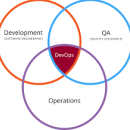
How does a site reliability differ from a devops engineer?

Asked by Last Modified  

1 Answer

Follow 1
Answer

Please enter your answer

While there is some overlap between the roles of Site Reliability Engineer (SRE) and DevOps Engineer, they have distinct focuses and responsibilities within an organization. Here are key differences between a Site Reliability Engineer and a DevOps Engineer: Site Reliability Engineer (SRE): Focus...
read more
While there is some overlap between the roles of Site Reliability Engineer (SRE) and DevOps Engineer, they have distinct focuses and responsibilities within an organization. Here are key differences between a Site Reliability Engineer and a DevOps Engineer: Site Reliability Engineer (SRE): Focus on Reliability: SREs primarily focus on ensuring the reliability, availability, and performance of systems and applications. Their goal is to minimize downtime and enhance the overall user experience. Service Level Objectives (SLOs) and Service Level Indicators (SLIs): SREs work with SLOs and SLIs to define, measure, and maintain the reliability of services. They establish and monitor key performance indicators to meet reliability goals. Automation and Code Development: SREs are often involved in automating operational tasks and developing code to manage infrastructure. They use programming skills to create tools for monitoring, alerting, and incident response. On-Call Duty: SREs typically participate in an on-call rotation, responding to incidents and ensuring the reliability of systems outside regular working hours. This is a key aspect of their role. Error Budgets: SREs manage error budgets, which represent the acceptable level of service disruption. They balance innovation and reliability by allowing a certain amount of service degradation within defined limits. Incident Response: SREs are actively involved in incident response, including identifying the root cause of issues, implementing remediation, and conducting post-incident reviews to prevent recurrence. DevOps Engineer: End-to-End Collaboration: DevOps Engineers focus on fostering collaboration and communication between development and operations teams throughout the entire software development lifecycle. Continuous Integration/Continuous Deployment (CI/CD): DevOps Engineers emphasize the automation of building, testing, and deploying code through CI/CD pipelines. They work to streamline the release process and enhance development efficiency. Infrastructure as Code (IaC): DevOps Engineers are responsible for defining and managing infrastructure as code. They use tools like Terraform or Ansible to automate the provisioning and configuration of infrastructure. Cross-Functional Skills: DevOps Engineers often possess a broad skill set that spans development, operations, and automation. They collaborate with different teams to optimize workflows and eliminate silos. Continuous Monitoring and Feedback: DevOps emphasizes continuous monitoring of applications and infrastructure to identify areas for improvement. Feedback loops are created to inform development and operations teams about performance and reliability. Culture and Collaboration: DevOps is as much about culture as it is about tools and practices. DevOps Engineers work to establish a culture of collaboration, breaking down traditional barriers between development and operations teams. While there are distinctions between Site Reliability Engineers and DevOps Engineers, it's important to note that the roles can vary between organizations. Some companies may use these terms interchangeably or have hybrid roles that encompass aspects of both disciplines. Ultimately, both SREs and DevOps Engineers contribute to the overall goal of improving the efficiency, reliability, and performance of software systems. read less
Comments

Related Questions

Hi, 

Being Non IT background , 

What all technologies I need to know in order to perform any devops job / devops aws / cloud admin jobs .
Thanks

Java,Python - Programming Languace Tools Maven/Ant/Gradel Jenkins Puppet/Chef/Salt etc. OS Window/Linux
Krish
I completed my graduation in 2017, now working as an HR Executive in a Consultancy. I want to move to IT Sector. Which course is best for me to learn and get success in life? Please Suggest me
Dear Kumar, My suggestion is to - become good in one programming language - preferably Java and one O/S preferably Linux. Be aware of Open Source systems. Try to identify the opportunities in your existing...
Kumar
Hi, I have done MBA, and I've been working as an IT recruiter. I am fed up with recruitment, so I want to learn DevOps course. Is it suitable for me?
Hi Suresh, As a part of leading training institute in hyderabad, Career Bridge IT Services provides all trending courses like DevOps + AWS. This is the best combo for future growth. Please contact Career...
Suresh
I am from computer science background. I do HTML5 and CSS but i want to learn Big data or DevOps. I am very much confused about which one to choose and which have a great future. Can anyone suggest?
If you studied maths in 11th and 12th,get into data science/business analytics/data analytics/bigdata analytics.Above mentioned are one and the same.Why am I suggesting above are following reasons. 1)Data...
Praveen

I have 8+ years of experience in IT operations, and I am planning to switch to DevOps, AWS, Azure. Please suggest.

You can start with Azure Infrastructure ( Azure Admin) learning later try to get real-time experience then plan for Azure Solution architect. While your experience growing learns PAAS components and concentrate...
Shiva

Now ask question in any of the 1000+ Categories, and get Answers from Tutors and Trainers on UrbanPro.com

Ask a Question

Related Lessons

Expectation From An AWS Associate Architect
Designing and Deploying scalable, highly available, and fault tolerant systems on AWS (These are the key points). Migration of an existing on-premises application to AWS (Database). Ingress...

Best Practices for improving continuous deployments
Power of Argo CD*Easily scales with Kubernetes clusters, suitable for large and complex deployments*Argo CD continuously monitors Git repositories and automatically applies changes to the Kubernetes cluster,...

Git Branch
Git Branch Branching means you diverge from the main line of development and continue to do work without messing with that main line. Commands List all the branch git branch Create a branch ...

Continuous Monitoring using Nagios
In today's DevOps related study, people are focusing more on continuous integration, continuous delivery, continuous deployment, continuous build etc. These are all processes and procedures before releasing...

Use Nexus as Docker Registry
There are different tools provides docker registry, and in this tutorial, we want to use Sonatype Nexus Repository Manager as our docker registry, and we will upload our images in there. I am using the...

Recommended Articles

Information technology consultancy or Information technology consulting is a specialized field in which one can set their focus on providing advisory services to business firms on finding ways to use innovations in information technology to further their business and meet the objectives of the business. Not only does...

Read full article >

Whether it was the Internet Era of 90s or the Big Data Era of today, Information Technology (IT) has given birth to several lucrative career options for many. Though there will not be a “significant" increase in demand for IT professionals in 2014 as compared to 2013, a “steady” demand for IT professionals is rest assured...

Read full article >

Almost all of us, inside the pocket, bag or on the table have a mobile phone, out of which 90% of us have a smartphone. The technology is advancing rapidly. When it comes to mobile phones, people today want much more than just making phone calls and playing games on the go. People now want instant access to all their business...

Read full article >

Business Process outsourcing (BPO) services can be considered as a kind of outsourcing which involves subletting of specific functions associated with any business to a third party service provider. BPO is usually administered as a cost-saving procedure for functions which an organization needs but does not rely upon to...

Read full article >

Looking for DevOps Training ?

Learn from the Best Tutors on UrbanPro

Are you a Tutor or Training Institute?

Join UrbanPro Today to find students near you