


 You have successfully registered
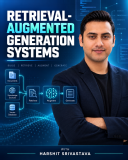

This specialized course teaches you how to build retrieval-augmented generation systems that answer questions using trusted documents and organizational knowledge. It is ideal for developers and AI professionals who want to make language-model applications more accurate, explainable, and domain-aware.
You will begin with the complete RAG workflow: loading documents, extracting content, cleaning text, attaching metadata, dividing content into chunks, generating embeddings, indexing vectors, retrieving relevant evidence, and supplying that evidence to a language model.
The class explains how chunk size, overlap, document structure, metadata, embedding selection, and retrieval configuration affect answer quality. You will implement semantic search and learn how it differs from keyword search. More advanced lessons introduce hybrid retrieval, query transformation, metadata filtering, reranking, and contextual compression.
You will learn to construct prompts that keep the model grounded in retrieved evidence and produce useful source references. The course also examines common RAG failures, including retrieving irrelevant content, missing the correct passage, losing context, generating unsupported claims, and exposing restricted information.
Evaluation is incorporated throughout the development process. You will create test questions and measure retrieval relevance, answer faithfulness, contextual precision, response quality, latency, and cost.
The course concludes with a production-oriented RAG project featuring document ingestion, a vector store, retrieval services, answer generation, citations, access controls, logging, and user feedback.
By the end, you will be able to design and evaluate a complete RAG system and understand the engineering decisions required to make it secure, scalable, maintainable, and useful in real applications.


 View this Course

 Top Tutor





 Certified