


 You have successfully registered



This one‑time workshop is designed for students and beginners who already know basic Java syntax and want a clear, practical overview of how Java is used in real projects. It is ideal for BCA/MCA/engineering students, school students learning Java (Class XI–XII), and freshers preparing for entry‑level Java developer roles.
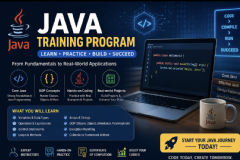
In this workshop, we will quickly revise core Java concepts (OOP, classes and objects, interfaces, collections, exceptions) and then see how these ideas are applied in simple applications. Depending on the level of the participants, we will walk through how a small Java project is structured, how to handle input/output, basic file handling, and how Java code can later be extended using frameworks like Spring Boot and connected to databases such as MySQL. The focus is on understanding “how things work together” rather than just theory, so students get a roadmap for further Java learning and interview preparation.
this workshop, we will quickly revise core Java concepts (OOP, classes and objects, interfaces, collections, exceptions) and then see how these ideas are applied in simple applications. Depending on the level of the participants, we will walk through how a small Java project is structured, how to handle input/output, basic file handling, and how Java code can later be extended using frameworks like Spring Boot and connected to databases such as MySQL. The focus is on understanding “how things work together” rather than just theory, so students get a roadmap for further Java learning and interview preparation.
Students should bring a notebook and, if possible, a laptop with Java and any IDE (like IntelliJ IDEA or Eclipse) installed, so they can follow along with the examples. Even if they do not have a laptop, they can still attend, take notes, and understand the overall flow of Java application development. This workshop helps learners see the bigger picture of Java, clear common doubts, and know what to study next for projects, exams, and interviews.

 View this Course


 Top Tutor



 Certified




