


 You have successfully registered
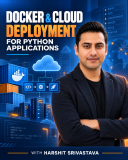

This course teaches you how to take a Python application from local development to a repeatable, secure, and production-ready cloud deployment. It is designed for Python developers who want practical deployment and DevOps skills without requiring extensive infrastructure experience.
You will begin with containers, images, registries, layers, ports, volumes, networks, and the difference between containers and virtual machines. You will create Dockerfiles for Python applications and learn how build context, dependency caching, base-image selection, and multi-stage builds affect security and performance.
The course covers containerising APIs and web applications, running development and production servers, using environment variables, managing configuration, creating health checks, and persisting data. Docker Compose is used to coordinate applications with databases, caches, queues, and supporting services.
You will then learn how to publish images to a container registry and deploy them to cloud infrastructure. The deployment workflow covers domain configuration, HTTPS, networking, database connectivity, secrets, logging, backups, scaling, and safe application updates.
Continuous integration and delivery are introduced through automated testing, image building, security checks, registry publishing, and deployment pipelines. You will also learn practical troubleshooting techniques for failed builds, container crashes, connection problems, and unhealthy services.
Monitoring topics include logs, metrics, resource utilisation, availability, and deployment rollback strategies. Cost awareness and basic production-security practices are incorporated throughout the course.
By the end, you will have containerised and deployed a complete Python application and will understand the operational steps required to keep it available, observable, secure, and maintainable.


 View this Course



 Top Tutor


 Certified




