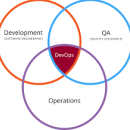
Why did DevOps become so popular?

Asked by Last Modified  

1 Answer

Follow 1
Answer

Please enter your answer

DevOps gained popularity for several reasons, driven by the need for organizations to address challenges in traditional software development and IT operations models. The popularity of DevOps can be attributed to the following factors: Faster Time-to-Market: DevOps focuses on streamlining and...
read more
DevOps gained popularity for several reasons, driven by the need for organizations to address challenges in traditional software development and IT operations models. The popularity of DevOps can be attributed to the following factors: Faster Time-to-Market: DevOps focuses on streamlining and automating the software development and delivery process. By breaking down silos between development and operations, organizations can achieve faster time-to-market for their software products and updates. Increased Collaboration: DevOps promotes collaboration and communication between development, operations, and other stakeholders. This collaborative approach helps teams work together more efficiently, leading to better coordination, shared responsibilities, and improved overall productivity. Automation of Manual Processes: DevOps emphasizes the automation of manual and repetitive tasks, reducing the likelihood of errors and freeing up human resources for more strategic and creative activities. Automation extends to areas such as code deployment, testing, infrastructure provisioning, and configuration management. Enhanced Reliability and Stability: By integrating development and operations practices, DevOps aims to improve the reliability and stability of software systems. Automation, continuous testing, and monitoring contribute to the early detection of issues and faster resolution, leading to more reliable and stable applications. Adaptation to Agile Principles: DevOps aligns well with Agile principles, which emphasize iterative development, collaboration, and customer feedback. Both DevOps and Agile share a focus on delivering value to users in a timely and efficient manner. Scalability and Flexibility: DevOps practices are designed to scale with the growth of an organization and its infrastructure. Automation, containerization, and cloud computing enable DevOps to adapt to changing business needs and handle increased workloads more effectively. Cultural Shift: DevOps brings about a cultural shift within organizations, fostering a shared sense of responsibility, accountability, and continuous improvement. This cultural transformation encourages a mindset where development and operations teams collaborate towards common goals. Cloud Computing and Virtualization: The rise of cloud computing and virtualization technologies provided the infrastructure needed to support DevOps practices. Cloud platforms offer scalable resources, allowing organizations to deploy and manage applications more dynamically. Competitive Advantage: Organizations that successfully implement DevOps practices gain a competitive advantage by delivering high-quality software more rapidly. This ability to innovate and respond quickly to market demands contributes to business success. Customer Satisfaction: DevOps aims to deliver features and improvements quickly, addressing customer needs and preferences more effectively. The rapid and reliable delivery of software contributes to higher customer satisfaction. Cost Reduction: Automation and efficiency improvements in the development and operations processes often lead to cost savings. Reduced manual effort, faster time-to-market, and optimized resource utilization contribute to overall cost reduction. Continuous Improvement: DevOps encourages a culture of continuous improvement. Teams regularly assess and refine their processes, incorporating feedback and learning from experiences to enhance efficiency and effectiveness. The combination of these factors has contributed to the widespread adoption and popularity of DevOps as a transformative approach to software development and IT operations. As organizations strive to remain competitive in a rapidly changing business landscape, DevOps provides a framework for achieving agility, reliability, and innovation. read less
Comments

Related Questions

I want to move into DevOps field from system admin. Is it possible?
Of course, you can move to DevOps and get jobs in this. You would have to add a couple of skills into your skillset which includes Cloud technology (AWS, Azure, GCP), Puppet/chef/Ansible, Jenkins/Bamboo/Teamcity,...
Naveen
Hi, I have done MBA, and I've been working as an IT recruiter. I am fed up with recruitment, so I want to learn DevOps course. Is it suitable for me?
Hi Suresh, As a part of leading training institute in hyderabad, Career Bridge IT Services provides all trending courses like DevOps + AWS. This is the best combo for future growth. Please contact Career...
Suresh
Need Develops online training instructor -Urgent
Hi I am conducting DevOps training program online and batch is going to start soon. Update me with timing and date you want to start
Suresh

Now ask question in any of the 1000+ Categories, and get Answers from Tutors and Trainers on UrbanPro.com

Ask a Question

Related Lessons

Expectation From An AWS Associate Architect
Designing and Deploying scalable, highly available, and fault tolerant systems on AWS (These are the key points). Migration of an existing on-premises application to AWS (Database). Ingress...

Want to build your career on market leading technologies then you can choose AWS and DEVOPS and BIGDATA
HI friends if you are serious to shape and build your career to High level you can move to AWS and DEVOPS and BIGDATA There are many cloud computing services /providers ..AMAZON is the Best of all ,and...
I

Invitech It Solutions

0 0
0

Git Branch
Git Branch Branching means you diverge from the main line of development and continue to do work without messing with that main line. Commands List all the branch git branch Create a branch ...

Lesson About CI & CD , Continuous Integration & Continuous Deployment
1. What is Continuous Integration ? Continuous Integration (CI) is a development practice that requires developers to integrate code into a shared repository several times a day. Each check-in is then...

DevOps Maven Lession
################### Maven ####################Maven Index:============1. Introduction To Maven2. Installation3. Architecture4. Default lifecycle5. Directory standards6. GAV7. Test project8....

Recommended Articles

Microsoft Excel is an electronic spreadsheet tool which is commonly used for financial and statistical data processing. It has been developed by Microsoft and forms a major component of the widely used Microsoft Office. From individual users to the top IT companies, Excel is used worldwide. Excel is one of the most important...

Read full article >

Software Development has been one of the most popular career trends since years. The reason behind this is the fact that software are being used almost everywhere today.  In all of our lives, from the morning’s alarm clock to the coffee maker, car, mobile phone, computer, ATM and in almost everything we use in our daily...

Read full article >

Whether it was the Internet Era of 90s or the Big Data Era of today, Information Technology (IT) has given birth to several lucrative career options for many. Though there will not be a “significant" increase in demand for IT professionals in 2014 as compared to 2013, a “steady” demand for IT professionals is rest assured...

Read full article >

Hadoop is a framework which has been developed for organizing and analysing big chunks of data for a business. Suppose you have a file larger than your system’s storage capacity and you can’t store it. Hadoop helps in storing bigger files than what could be stored on one particular server. You can therefore store very,...

Read full article >

Looking for DevOps Training ?

Learn from the Best Tutors on UrbanPro

Are you a Tutor or Training Institute?

Join UrbanPro Today to find students near you