What is the difference between cloud and devops?

Asked by Last Modified  

1 Answer

Follow 1
Answer

Please enter your answer

Cloud computing and DevOps are related concepts in the field of technology and software development, but they serve different purposes and address distinct aspects of the development and deployment lifecycle. Cloud Computing: Definition: Cloud computing refers to the delivery of computing services,...
read more
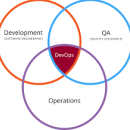
Cloud computing and DevOps are related concepts in the field of technology and software development, but they serve different purposes and address distinct aspects of the development and deployment lifecycle. Cloud Computing: Definition: Cloud computing refers to the delivery of computing services, including storage, processing power, databases, networking, analytics, and software, over the internet. Instead of owning and maintaining physical servers and infrastructure, users can access and use resources on-demand from a cloud service provider. Key Characteristics: On-Demand Self-Service: Users can provision and manage computing resources as needed without human intervention. Broad Network Access: Services are accessible over the network and can be accessed by various devices. Resource Pooling: Resources are shared and allocated dynamically to meet the demand of multiple users. Rapid Elasticity: Resources can be scaled up or down quickly to accommodate changing workloads. Measured Service: Usage is monitored, controlled, and billed based on the actual consumption of resources. Examples of Cloud Service Providers: Amazon Web Services (AWS), Microsoft Azure, Google Cloud Platform (GCP), and others. DevOps: Definition: DevOps is a set of practices that aim to unify software development (Dev) and IT operations (Ops) to improve collaboration, communication, and efficiency in the development and delivery of software applications. It involves breaking down traditional silos between development and operations teams to create a more streamlined and automated workflow. Key Principles: Collaboration: Foster collaboration and communication between development and operations teams. Automation: Automate repetitive tasks, such as testing, deployment, and infrastructure provisioning, to improve efficiency and reduce errors. Continuous Integration (CI): Integrate code changes frequently into a shared repository to detect and address issues early in the development process. Continuous Deployment (CD): Automatically deploy code changes to production after passing automated tests. Monitoring and Feedback: Continuously monitor applications and infrastructure, and use feedback to improve processes. Tools in DevOps: Various tools are used in DevOps, such as version control systems (e.g., Git), continuous integration tools (e.g., Jenkins), configuration management tools (e.g., Ansible, Puppet), and containerization platforms (e.g., Docker). In summary, cloud computing focuses on providing scalable and on-demand infrastructure and services over the internet, while DevOps focuses on improving collaboration and automation within development and operations teams to enhance the speed and quality of software delivery. While they can be used together, they address different aspects of the software development and deployment lifecycle. read less
Comments

Related Questions

I have 8+ years of experience in IT operations, and I am planning to switch to DevOps, AWS, Azure. Please suggest.

You can start with Azure Infrastructure ( Azure Admin) learning later try to get real-time experience then plan for Azure Solution architect. While your experience growing learns PAAS components and concentrate...
Shiva
Hi, I am pursuing MBA 1st Year. I want to learn Digital Marketing. Is it right for career growth, or should I choose to learn some other technologies? If yes, please give me your suggestions that help me to get a JOB in the IT Sector.
Hi Sai, To find right career path you need to try things ( Which is long way). I would suggest you to learn multiple things ( implementation is important part) and then find your intrest and dive in to...
Sai

Hello All,

I am currently working as a manual tester and thinking to learn DevOps, I do not have any coding knowledge/experience. Can anyone suggest if the path I am choosing is preferable?

Moving from other domain to DevOps has experienced professionals. You should know basics of Linux, Cloud Basic ( AWS/GCP/Azure ) and some DevOps tools like Git, Jenkins, Docker and configuration management tools.
Venkata
0 0
7

I am having 5+ years exp in civil engineering now I am thinking to move in IT sector can u suggest me which field is better to learn ? I am thinking to do Linux+devops+aws or powerBi 

Hi Waseem, I am a Devops and cloud engineed since last approximatelt 4 years.Linux,DevOps (techniques and tools) and Cloud, all are very much intera-related. DevOps and Cloud both are burning needs in...
Waseem

Now ask question in any of the 1000+ Categories, and get Answers from Tutors and Trainers on UrbanPro.com

Ask a Question

Related Lessons

Git Branch
Git Branch Branching means you diverge from the main line of development and continue to do work without messing with that main line. Commands List all the branch git branch Create a branch ...

Expectation From An AWS Associate Architect
Designing and Deploying scalable, highly available, and fault tolerant systems on AWS (These are the key points). Migration of an existing on-premises application to AWS (Database). Ingress...

DevOps Git
Removing a file from git staging (index) area. Assume git add sample file => for adding the file to git staging area. Check the git status command Use git rm for removing the content from working...

Use Nexus as Docker Registry
There are different tools provides docker registry, and in this tutorial, we want to use Sonatype Nexus Repository Manager as our docker registry, and we will upload our images in there. I am using the...

Best Practices for improving continuous deployments
Power of Argo CD*Easily scales with Kubernetes clusters, suitable for large and complex deployments*Argo CD continuously monitors Git repositories and automatically applies changes to the Kubernetes cluster,...

Recommended Articles

Whether it was the Internet Era of 90s or the Big Data Era of today, Information Technology (IT) has given birth to several lucrative career options for many. Though there will not be a “significant" increase in demand for IT professionals in 2014 as compared to 2013, a “steady” demand for IT professionals is rest assured...

Read full article >

Information technology consultancy or Information technology consulting is a specialized field in which one can set their focus on providing advisory services to business firms on finding ways to use innovations in information technology to further their business and meet the objectives of the business. Not only does...

Read full article >

Microsoft Excel is an electronic spreadsheet tool which is commonly used for financial and statistical data processing. It has been developed by Microsoft and forms a major component of the widely used Microsoft Office. From individual users to the top IT companies, Excel is used worldwide. Excel is one of the most important...

Read full article >

Applications engineering is a hot trend in the current IT market.  An applications engineer is responsible for designing and application of technology products relating to various aspects of computing. To accomplish this, he/she has to work collaboratively with the company’s manufacturing, marketing, sales, and customer...

Read full article >

Looking for DevOps Training ?

Learn from the Best Tutors on UrbanPro

Are you a Tutor or Training Institute?

Join UrbanPro Today to find students near you