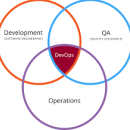
What comes after DevOps?

Asked by Last Modified  

1 Answer

Follow 1
Answer

Please enter your answer

Predicting precisely what comes after DevOps is challenging, as the evolution of technology and practices is dynamic. However, there are several emerging trends and areas of interest that could shape the future of software development and IT operations. Keep in mind that the evolution of practices...
read more
Predicting precisely what comes after DevOps is challenging, as the evolution of technology and practices is dynamic. However, there are several emerging trends and areas of interest that could shape the future of software development and IT operations. Keep in mind that the evolution of practices often builds upon existing concepts, and the transition to new paradigms can be gradual. Here are some trends and areas to watch: DevSecOps: The integration of security practices into the DevOps pipeline is a natural evolution. DevSecOps emphasizes the importance of security throughout the software development lifecycle, promoting collaboration between development, operations, and security teams. GitOps: GitOps is an approach where infrastructure and application configurations are managed through version-controlled Git repositories. This paradigm simplifies deployment and management tasks by using Git as the single source of truth for infrastructure and application state. AIOps (Artificial Intelligence for IT Operations): AIOps involves leveraging artificial intelligence and machine learning to automate and enhance IT operations tasks. This includes intelligent monitoring, anomaly detection, and automated incident response. Serverless Computing: The serverless computing paradigm, where developers focus on writing code without managing the underlying infrastructure, continues to gain traction. It allows for more granular billing and simplifies scalability. NoOps: NoOps envisions a scenario where operations tasks are abstracted away to the point where developers don't need to worry about infrastructure and operations. While it's more of a concept than a practical reality, it reflects a desire for increased automation and abstraction. Edge Computing: With the rise of edge computing, there's an increasing focus on deploying applications and processing data closer to the source, reducing latency and improving performance for edge devices. Kubernetes and Cloud-Native Technologies: Kubernetes and cloud-native technologies continue to be foundational for container orchestration and microservices architectures. The ecosystem around these technologies is likely to evolve with new tools and best practices. Hybrid and Multi-Cloud Strategies: Organizations are increasingly adopting hybrid and multi-cloud strategies, leveraging services from multiple cloud providers. Managing and orchestrating applications across diverse environments will be a key focus. SRE (Site Reliability Engineering): Site Reliability Engineering, inspired by Google's approach to operations, focuses on maintaining reliability and availability through a balance of automation, monitoring, and incident response. Shift-Left Testing and Quality Assurance: The trend towards shifting testing and quality assurance activities earlier in the development process is likely to continue. This includes a greater emphasis on automated testing and quality checks during the development phase. It's important to note that the evolution of practices is not linear, and various concepts may coexist and influence each other. The adoption of new practices depends on the specific needs, challenges, and goals of organizations. Keeping abreast of industry trends, participating in the community, and embracing a mindset of continuous learning will be crucial for professionals and organizations adapting to what comes next after DevOps. read less
Comments

Related Questions

Hi, 

Being Non IT background , 

What all technologies I need to know in order to perform any devops job / devops aws / cloud admin jobs .
Thanks

Java,Python - Programming Languace Tools Maven/Ant/Gradel Jenkins Puppet/Chef/Salt etc. OS Window/Linux
Krish

Can I get ci cd automation knowledge on devops?


yes you will get CI CD in devops.
Shilpa
0 0
5

Hello All,

I am currently working as a manual tester and thinking to learn DevOps, I do not have any coding knowledge/experience. Can anyone suggest if the path I am choosing is preferable?

Moving from other domain to DevOps has experienced professionals. You should know basics of Linux, Cloud Basic ( AWS/GCP/Azure ) and some DevOps tools like Git, Jenkins, Docker and configuration management tools.
Venkata
0 0
7

Now ask question in any of the 1000+ Categories, and get Answers from Tutors and Trainers on UrbanPro.com

Ask a Question

Related Lessons

Best Practices for Securing our Docker Containers

Lesson About CI & CD , Continuous Integration & Continuous Deployment
1. What is Continuous Integration ? Continuous Integration (CI) is a development practice that requires developers to integrate code into a shared repository several times a day. Each check-in is then...

Best Practices for improving continuous deployments
Power of Argo CD*Easily scales with Kubernetes clusters, suitable for large and complex deployments*Argo CD continuously monitors Git repositories and automatically applies changes to the Kubernetes cluster,...

How to install Apache HTTP in Linux OS
sudo bash // for becoming super user // now left hand side you can see root yum update // for updates yum install httpd // for installing httpd software service httpd start // for starting httpd software Once...

Git Branch
Git Branch Branching means you diverge from the main line of development and continue to do work without messing with that main line. Commands List all the branch git branch Create a branch ...

Recommended Articles

Almost all of us, inside the pocket, bag or on the table have a mobile phone, out of which 90% of us have a smartphone. The technology is advancing rapidly. When it comes to mobile phones, people today want much more than just making phone calls and playing games on the go. People now want instant access to all their business...

Read full article >

Applications engineering is a hot trend in the current IT market.  An applications engineer is responsible for designing and application of technology products relating to various aspects of computing. To accomplish this, he/she has to work collaboratively with the company’s manufacturing, marketing, sales, and customer...

Read full article >

Business Process outsourcing (BPO) services can be considered as a kind of outsourcing which involves subletting of specific functions associated with any business to a third party service provider. BPO is usually administered as a cost-saving procedure for functions which an organization needs but does not rely upon to...

Read full article >

Whether it was the Internet Era of 90s or the Big Data Era of today, Information Technology (IT) has given birth to several lucrative career options for many. Though there will not be a “significant" increase in demand for IT professionals in 2014 as compared to 2013, a “steady” demand for IT professionals is rest assured...

Read full article >

Looking for DevOps Training ?

Learn from the Best Tutors on UrbanPro

Are you a Tutor or Training Institute?

Join UrbanPro Today to find students near you