How does DevOps affect enterprise architecture?

Asked by Last Modified  

1 Answer

Follow 1
Answer

Please enter your answer

DevOps has a profound impact on enterprise architecture by influencing the way organizations design, deploy, and manage their software systems. The integration of DevOps principles with enterprise architecture practices leads to improvements in agility, collaboration, and efficiency. Here are some...
read more
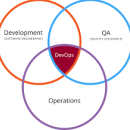
DevOps has a profound impact on enterprise architecture by influencing the way organizations design, deploy, and manage their software systems. The integration of DevOps principles with enterprise architecture practices leads to improvements in agility, collaboration, and efficiency. Here are some ways DevOps affects enterprise architecture: Agile and Flexible Architecture: DevOps encourages an agile approach to software development and deployment. This agility extends to enterprise architecture, fostering the creation of flexible, modular, and adaptable architectures that can respond to changing business requirements. Microservices Architecture: DevOps often aligns with microservices architecture, where applications are composed of loosely coupled, independently deployable services. This approach allows for faster development, deployment, and scaling, providing a more granular and scalable architecture. Continuous Integration and Continuous Delivery (CI/CD): DevOps promotes CI/CD practices, automating the integration, testing, and delivery of code changes. This influences enterprise architecture by requiring systems that support seamless integration and automated deployment processes. Infrastructure as Code (IaC): IaC is a DevOps practice that treats infrastructure configurations as code. This approach impacts enterprise architecture by allowing for the automated provisioning and management of infrastructure, enabling consistency and scalability. Collaboration Across Teams: DevOps breaks down silos between development and operations teams. This cultural shift encourages collaboration between architects, developers, and operations professionals throughout the software development lifecycle, leading to better-aligned architecture decisions. Automation and Orchestration: DevOps emphasizes automation to streamline processes. Enterprise architecture can benefit from automation and orchestration tools, ensuring that infrastructure, applications, and workflows are efficiently managed and deployed. Scalability and Elasticity: DevOps practices support the design of scalable and elastic systems. Enterprise architecture can incorporate principles such as auto-scaling and load balancing to ensure that applications can scale seamlessly based on demand. Monitoring and Observability: DevOps promotes continuous monitoring and observability to detect and address issues in real-time. Enterprise architecture can include robust monitoring solutions, allowing for proactive management of the entire IT landscape. Security Integration (DevSecOps): Integrating security practices into DevOps (DevSecOps) is critical for enterprise architecture. Security considerations must be embedded into the architecture, development, and operations processes to create secure and compliant systems. Legacy System Integration: DevOps practices enable the integration of new systems with legacy infrastructure. Enterprise architecture should consider the need for seamless integration between modern, cloud-native applications and existing legacy systems. Cultural Transformation: DevOps is as much about culture as it is about tools and processes. The cultural shift toward collaboration and shared responsibility influences how architects design systems and interact with development and operations teams. Feedback Loops and Continuous Improvement: DevOps introduces feedback loops for continuous improvement. This impacts enterprise architecture by encouraging iterative design, where architectures are refined based on feedback from development, operations, and end-users. In summary, DevOps transforms enterprise architecture by promoting agility, automation, collaboration, and a focus on delivering value to end-users. Organizations that successfully integrate DevOps with their enterprise architecture practices can achieve faster, more reliable software delivery and better alignment with business objectives. read less
Comments

Related Questions

I'm having 5+ years of experience in mechanical stream, now I'm looking to move IT sector so can you suggest me which course is good in market and which is easily understand for non IT fellows too. I thought to choose devops +AWS,  is this good in the current scenario? 

Hi Siva, Being a mechanical engineer, if you want to come into the software field, there are good opportunities in Mech engineering-related technologies. For example, Ansys, Pro E, Catia, Solid Works,...
Siva

Hello All,

I am currently working as a manual tester and thinking to learn DevOps, I do not have any coding knowledge/experience. Can anyone suggest if the path I am choosing is preferable?

Moving from other domain to DevOps has experienced professionals. You should know basics of Linux, Cloud Basic ( AWS/GCP/Azure ) and some DevOps tools like Git, Jenkins, Docker and configuration management tools.
Venkata
0 0
7

I want to move into DevOps field from system admin. Is it possible?

Of course, you can move to DevOps and get jobs in this. You would have to add a couple of skills into your skillset which includes Cloud technology (AWS, Azure, GCP), Puppet/chef/Ansible, Jenkins/Bamboo/Teamcity,...
Naveen
Hi, I am pursuing MBA 1st Year. I want to learn Digital Marketing. Is it right for career growth, or should I choose to learn some other technologies? If yes, please give me your suggestions that help me to get a JOB in the IT Sector.
Hi Sai, To find right career path you need to try things ( Which is long way). I would suggest you to learn multiple things ( implementation is important part) and then find your intrest and dive in to...
Sai

Now ask question in any of the 1000+ Categories, and get Answers from Tutors and Trainers on UrbanPro.com

Ask a Question

Related Lessons

DevOps Training Course
DevOps Syllabus: DevOps Essentials: What is DevOps? Why DevOps? Evolution of Software Methodologies Dev Challenges v/s DevOps Solution Ops Challenges v/s DevOps Solution Stages Of DevOps Lifecycle...

Best Practices for Securing our Docker Containers

DevOps Git
Removing a file from git staging (index) area. Assume git add sample file => for adding the file to git staging area. Check the git status command Use git rm for removing the content from working...

Use Nexus as Docker Registry
There are different tools provides docker registry, and in this tutorial, we want to use Sonatype Nexus Repository Manager as our docker registry, and we will upload our images in there. I am using the...

DevOps Git Lession
*********** GIT ************Git Index:==========1. Introduction to git2. Terminology3. Repo4. gitignore5. logs6. Branching7. Merging8. stash9. unstaging(rm, reset, revert)10. Tags11. bisect12. HEAD13....

Recommended Articles

Business Process outsourcing (BPO) services can be considered as a kind of outsourcing which involves subletting of specific functions associated with any business to a third party service provider. BPO is usually administered as a cost-saving procedure for functions which an organization needs but does not rely upon to...

Read full article >

Information technology consultancy or Information technology consulting is a specialized field in which one can set their focus on providing advisory services to business firms on finding ways to use innovations in information technology to further their business and meet the objectives of the business. Not only does...

Read full article >

Microsoft Excel is an electronic spreadsheet tool which is commonly used for financial and statistical data processing. It has been developed by Microsoft and forms a major component of the widely used Microsoft Office. From individual users to the top IT companies, Excel is used worldwide. Excel is one of the most important...

Read full article >

Applications engineering is a hot trend in the current IT market.  An applications engineer is responsible for designing and application of technology products relating to various aspects of computing. To accomplish this, he/she has to work collaboratively with the company’s manufacturing, marketing, sales, and customer...

Read full article >

Looking for DevOps Training ?

Learn from the Best Tutors on UrbanPro

Are you a Tutor or Training Institute?

Join UrbanPro Today to find students near you