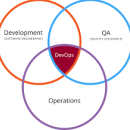
How do I learn DevOps easily?

Asked by Last Modified  

1 Answer

Follow 1
Answer

Please enter your answer

Learning DevOps involves gaining proficiency in a set of practices, tools, and principles that promote collaboration, automation, and efficiency in the software development and IT operations processes. Here's a step-by-step guide to help you learn DevOps more easily: Understand DevOps Fundamentals: Start...
read more
Learning DevOps involves gaining proficiency in a set of practices, tools, and principles that promote collaboration, automation, and efficiency in the software development and IT operations processes. Here's a step-by-step guide to help you learn DevOps more easily: Understand DevOps Fundamentals: Start by gaining a solid understanding of DevOps principles and its core concepts. Familiarize yourself with the key pillars of DevOps, including collaboration, automation, continuous integration, continuous delivery, and continuous monitoring. Learn Version Control: Gain proficiency in version control systems like Git, which is a fundamental tool for DevOps practices. Learn how to create repositories, manage branches, and collaborate with others using Git. Platforms like GitHub and GitLab are commonly used in the DevOps ecosystem. Master a Scripting Language: Learn a scripting language to automate tasks and processes. Python, Bash, or PowerShell are commonly used in DevOps. Focus on automating routine tasks, configuration management, and deployment processes. Explore Configuration Management: Understand configuration management tools like Ansible, Puppet, or Chef. These tools automate the provisioning and configuration of infrastructure, ensuring consistency across different environments. Containerization and Orchestration: Learn about containerization using Docker and container orchestration with Kubernetes. Containers simplify deployment and increase portability, while orchestrators automate the management of containerized applications. Continuous Integration and Continuous Delivery (CI/CD): Understand the principles of CI/CD and learn tools like Jenkins, GitLab CI, or Travis CI. Explore how to set up automated build and deployment pipelines, and practice integrating code changes frequently. Cloud Platforms: Familiarize yourself with popular cloud platforms like AWS, Azure, or Google Cloud. Learn how to provision and manage infrastructure as code, deploy applications, and leverage cloud services for scalability and flexibility. Infrastructure as Code (IaC): Learn IaC tools like Terraform or AWS CloudFormation to define and manage infrastructure using code. IaC enables automated and repeatable infrastructure deployment. Monitoring and Logging: Explore monitoring tools like Prometheus, Grafana, and logging solutions like ELK Stack (Elasticsearch, Logstash, Kibana). Understand how to monitor and analyze system performance and logs for troubleshooting. Join Online Communities: Engage with the DevOps community through forums, blogs, and social media. Platforms like Stack Overflow, Reddit (r/devops), and DevOps-specific forums provide valuable insights, tips, and solutions. Take Online Courses and Certifications: Enroll in online courses and certifications to deepen your understanding of DevOps practices. Platforms like Udacity, Coursera, edX, and A Cloud Guru offer DevOps-related courses. Consider certifications from providers like AWS, Microsoft, or Docker. Build Real-World Projects: Apply your knowledge by working on real-world projects. Build automation scripts, set up CI/CD pipelines, and deploy applications using the tools and practices you've learned. Practical experience is crucial for reinforcing your skills. Stay Updated: DevOps is a dynamic field with continuous advancements. Stay updated on new tools, best practices, and industry trends by following blogs, attending webinars, and participating in conferences or meetups. Remember that learning DevOps is an ongoing process, and practical experience is key to mastery. Start with foundational concepts and gradually delve into more advanced topics as you gain confidence. Consistent practice, hands-on projects, and a curiosity to explore new technologies will contribute to your success in mastering DevOps. read less
Comments

Related Questions

I'm having 5+ years of experience in mechanical stream, now I'm looking to move IT sector so can you suggest me which course is good in market and which is easily understand for non IT fellows too. I thought to choose devops +AWS,  is this good in the current scenario? 

Hi Siva, Being a mechanical engineer, if you want to come into the software field, there are good opportunities in Mech engineering-related technologies. For example, Ansys, Pro E, Catia, Solid Works,...
Siva

I am having 5+ years exp in civil engineering now I am thinking to move in IT sector can u suggest me which field is better to learn ? I am thinking to do Linux+devops+aws or powerBi 

Hi Waseem, I am a Devops and cloud engineed since last approximatelt 4 years.Linux,DevOps (techniques and tools) and Cloud, all are very much intera-related. DevOps and Cloud both are burning needs in...
Waseem
I completed my graduation in 2017, now working as an HR Executive in a Consultancy. I want to move to IT Sector. Which course is best for me to learn and get success in life? Please Suggest me
Dear Kumar, My suggestion is to - become good in one programming language - preferably Java and one O/S preferably Linux. Be aware of Open Source systems. Try to identify the opportunities in your existing...
Kumar

Hello All,

I am currently working as a manual tester and thinking to learn DevOps, I do not have any coding knowledge/experience. Can anyone suggest if the path I am choosing is preferable?

Moving from other domain to DevOps has experienced professionals. You should know basics of Linux, Cloud Basic ( AWS/GCP/Azure ) and some DevOps tools like Git, Jenkins, Docker and configuration management tools.
Venkata
0 0
7

Now ask question in any of the 1000+ Categories, and get Answers from Tutors and Trainers on UrbanPro.com

Ask a Question

Related Lessons

Install MySQL 5.7
# MySQL MySQL is the database service which is needed for the application. So we need to install it and configure it for the application to work. ## Manual Steps to Install MySQL As per the Application...

DevOps Git Lession
*********** GIT ************Git Index:==========1. Introduction to git2. Terminology3. Repo4. gitignore5. logs6. Branching7. Merging8. stash9. unstaging(rm, reset, revert)10. Tags11. bisect12. HEAD13....

Lesson About CI & CD , Continuous Integration & Continuous Deployment
1. What is Continuous Integration ? Continuous Integration (CI) is a development practice that requires developers to integrate code into a shared repository several times a day. Each check-in is then...

Practicing Chef with out installing on your server
Hi Students, Go to the following webiste and create your free account. https://manage.chef.io/login You can practice on your won without having to install Chef for DevOps practice. Create AWS instances...

Continuous Monitoring using Nagios
In today's DevOps related study, people are focusing more on continuous integration, continuous delivery, continuous deployment, continuous build etc. These are all processes and procedures before releasing...

Recommended Articles

Software Development has been one of the most popular career trends since years. The reason behind this is the fact that software are being used almost everywhere today.  In all of our lives, from the morning’s alarm clock to the coffee maker, car, mobile phone, computer, ATM and in almost everything we use in our daily...

Read full article >

Almost all of us, inside the pocket, bag or on the table have a mobile phone, out of which 90% of us have a smartphone. The technology is advancing rapidly. When it comes to mobile phones, people today want much more than just making phone calls and playing games on the go. People now want instant access to all their business...

Read full article >

Information technology consultancy or Information technology consulting is a specialized field in which one can set their focus on providing advisory services to business firms on finding ways to use innovations in information technology to further their business and meet the objectives of the business. Not only does...

Read full article >

Business Process outsourcing (BPO) services can be considered as a kind of outsourcing which involves subletting of specific functions associated with any business to a third party service provider. BPO is usually administered as a cost-saving procedure for functions which an organization needs but does not rely upon to...

Read full article >

Looking for DevOps Training ?

Learn from the Best Tutors on UrbanPro

Are you a Tutor or Training Institute?

Join UrbanPro Today to find students near you