


Your Worksheet is Ready
CBSE - Class 11 Chemistry Organic Chemistry – Some Basic Principles and Techniques Worksheet
For the following bond cleavages, use curved-arrows to show the electron flow and classify each as homolysis or heterolysis. Identify reactive intermediate produced as free radical, carbocation and carbanion.
(c) 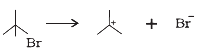
For the following bond cleavages, use curved-arrows to show the electron flow and classify each as homolysis or heterolysis. Identify reactive intermediate produced as free radical, carbocation and carbanion.
(b) 
Identify the one which on reaction with carboxylic acid at high temperatures give eater
Ketone
b.Aldehyde
c.Alcohol
d.Sugar
Identify the functional groups in the following compounds
(a) 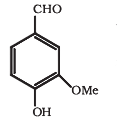
What is the relationship between the members of following pairs of structures ? Are they structural or geometrical isomers or resonance contributors ?
(c) 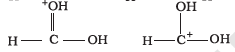
Give the IUPAC names of the following compounds : (c) 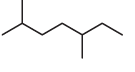
Worksheet Answers


