


Your Worksheet is Ready
CBSE - Class 11 Chemistry Hydrocarbons Worksheet
EXERCISES
Write IUPAC names of the following compounds :
(c) 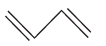
Worksheet Answers
Solution:
Alkanes are non-polar molecules held together primarily by weak London dispersion forces (also known as van der Waals forces). The magnitude of these forces is directly proportional to the surface area of contact between adjacent molecules. [Per the principles of London Dispersion Force theory].
As the degree of branching in an alkane chain increases, the molecule shifts from a linear, elongated geometry to a more compact, spherical shape. This geometric transformation significantly reduces the total surface area available for intermolecular contact.
Boiling point is defined as the temperature at which the vapor pressure of a liquid equals the external pressure. To transition from the liquid state to the gaseous state, sufficient kinetic energy must be supplied to overcome the intermolecular forces holding the molecules together.
| Property | Linear Alkane | Branched Alkane |
|---|---|---|
| Molecular Geometry | Elongated/Extended | Compact/Spherical |
| Contact Surface Area | High | Low |
| Magnitude of van der Waals Forces | Stronger | Weaker |
| Boiling Point | Higher | Lower |
Because branching reduces the contact surface area between molecules, the strength of the London dispersion forces decreases. Consequently, less thermal energy is required to overcome these forces in branched alkanes compared to their linear isomers of the same molecular mass. [By the kinetic molecular theory and van der Waals interactions].
Final Solution: The boiling point of an alkane decreases as the degree of branching increases due to the reduction in effective surface area and a corresponding decrease in the strength of London dispersion forces.
Solution:
The conversion of an acyclic alkane ($C_nH_{2n+2}$) into an aromatic hydrocarbon ($C_6H_6$) is achieved through a process known as dehydrocyclization or aromatization. For $n$-hexane ($CH_3(CH_2)_4CH_3$), this process involves two simultaneous reactions: the cyclization of the carbon chain and the dehydrogenation of the molecule [Per the principle of catalytic reforming in petrochemical industry].
To facilitate the transformation of $n$-hexane to benzene, the alkane must be heated under high pressure in the presence of specific metallic catalysts. The standard industrial and laboratory conditions are as follows:
The reaction proceeds via the removal of four molecules of hydrogen ($H_2$) to establish the resonance-stabilized aromatic ring system.
$CH_3-CH_2-CH_2-CH_2-CH_2-CH_3 \xrightarrow{Cr_2O_3/Al_2O_3, 773K} C_6H_6 + 4H_2$
[Justification: The enthalpy of the reaction is endothermic; high temperatures are required to overcome the activation energy barrier for the closure of the six-membered ring and subsequent loss of hydrogen atoms].
| Species | Molecular Formula | Degree of Unsaturation |
|---|---|---|
| n-Hexane | $C_6H_{14}$ | 0 |
| Benzene | $C_6H_6$ | 4 |
The conversion increases the degree of unsaturation by 4, reflecting the loss of $4 \times H_2$ molecules to form the three double bonds and the closed-ring structure [Per the Huckel's Rule of aromaticity ($4n+2$ $\pi$ electrons, where $n=1$)].
Final Solution: $n$-Hexane is converted into benzene by heating it with $Cr_2O_3$, $V_2O_5$, or $Mo_2O_3$ supported over alumina at $773 \, K$ under high pressure, a process known as catalytic dehydrocyclization.
Solution:
The objective is to synthesize p-nitrobromobenzene from benzene. This transformation requires two electrophilic aromatic substitution reactions: Bromination and Nitration. The sequence of these reactions is critical due to the directing effects of the substituents.
Benzene is treated with bromine in the presence of a Lewis acid catalyst, typically anhydrous aluminum bromide ($FeBr_3$ or $AlBr_3$), to form bromobenzene. This is an electrophilic aromatic substitution reaction. [Per the mechanism of electrophilic aromatic substitution]
$C_6H_6 + Br_2 \xrightarrow{FeBr_3} C_6H_5Br + HBr$
Bromine is an ortho/para directing group due to the +M (mesomeric) effect of the lone pairs on the bromine atom, which outweighs its -I (inductive) effect. When bromobenzene undergoes nitration using a mixture of concentrated nitric acid ($HNO_3$) and concentrated sulfuric acid ($H_2SO_4$), the nitro group ($-NO_2$) is introduced primarily at the para position due to steric hindrance at the ortho position. [Per the Directing Effect of Substituents in Electrophilic Aromatic Substitution]
$C_6H_5Br + HNO_3 \xrightarrow{H_2SO_4, 323-333K} C_6H_4(Br)(NO_2) + H_2O$
| Step | Reagents | Product | Regioselectivity |
|---|---|---|---|
| 1 | $Br_2 / FeBr_3$ | Bromobenzene | N/A (Monosubstitution) |
| 2 | $conc. HNO_3 / conc. H_2SO_4$ | p-nitrobromobenzene | Para-major product |
The use of $H_2SO_4$ facilitates the generation of the active electrophile, the nitronium ion ($NO_2^+$), according to the following equilibrium:
$HNO_3 + 2H_2SO_4 \rightleftharpoons NO_2^+ + H_3O^+ + 2HSO_4^-$
Final Solution: The conversion is achieved by first brominating benzene with $Br_2/FeBr_3$ to form bromobenzene, followed by nitration using concentrated $HNO_3$ and concentrated $H_2SO_4$ to yield p-nitrobromobenzene.
Solution:
The compound provided is Pent-2-ene. Its structural formula is $CH_3-CH_2-CH=CH-CH_3$. Ozonolysis is an oxidative cleavage reaction involving the addition of ozone ($O_3$) to the carbon-carbon double bond, followed by reductive cleavage using zinc dust ($Zn/H_2O$) to produce carbonyl compounds.
The ozone molecule adds across the double bond of Pent-2-ene to form an unstable cyclic intermediate known as a molozonide, which undergoes rearrangement to form a stable ozonide structure.
Reaction: $CH_3CH_2CH=CHCH_3 + O_3 \rightarrow \text{Ozonide Intermediate}$
The ozonide is treated with $Zn/H_2O$. This step splits the $C-C$ bond where the double bond existed, forming two carbonyl fragments. The zinc reacts with $H_2O_2$ (byproduct) to prevent further oxidation of the products [Per the mechanism of reductive ozonolysis].
The reaction equation is as follows:
$CH_3CH_2CH=CHCH_3 \xrightarrow[Zn/H_2O]{O_3} CH_3CH_2CHO + CH_3CHO$
| Reactant | Bond Cleaved | Product A | Product B |
|---|---|---|---|
| Pent-2-ene | $C_2=C_3$ | Propanal | Ethanal |
Final Solution: The products obtained by the ozonolysis of Pent-2-ene are Propanal and Ethanal.
Solution:
The reactivity of an aromatic ring toward an electrophile ($E^+$) is governed by the electron density within the $\pi$-cloud of the benzene ring. Electrophiles are electron-deficient species; therefore, higher electron density in the ring facilitates a faster reaction [Per the Electronic Theory of Organic Reactivity]. Substituents attached to the benzene ring influence this density via:
| Compound | Substituent(s) | Electronic Effect |
|---|---|---|
| Toluene | $-CH_3$ | $+I$ effect and Hyperconjugation ($+H$); Electron-donating group (EDG). Increases ring electron density. |
| $p-H_3C-C_6H_4-NO_2$ | $-CH_3$ and $-NO_2$ | $-NO_2$ is a strong $-I$ and $-R$ (electron-withdrawing group, EWG). It drastically reduces ring electron density despite the methyl group. |
| $p-O_2N-C_6H_4-NO_2$ | Two $-NO_2$ groups | Two strong EWGs ($-I$ and $-R$ effects). The ring is highly electron-deficient, resulting in minimum reactivity toward $E^+$. |
The reactivity sequence is determined by the net electron density at the ortho/para positions:
Final Solution: The order of decreasing relative reactivity is: Toluene > $p-Nitrotoluene$ > $p-Dinitrobenzene$.
Solution:
The reactant is $3,4\text{-dimethylhept-3-ene}$. We first determine its molecular structure based on the IUPAC nomenclature:
Structural Formula: $CH_3-CH_2-C(CH_3)=C(CH_3)-CH_2-CH_2-CH_3$
Ozonolysis involves the addition of ozone ($O_3$) to the alkene to form an ozonide intermediate, followed by reductive cleavage (typically using $Zn/H_2O$) to break the $C=C$ bond. [Per the Criegee Mechanism for Ozonolysis].
The cleavage occurs at the site of the double bond:
$R_1R_2C=CR_3R_4 \xrightarrow{1. O_3, 2. Zn/H_2O} R_1R_2C=O + R_3R_4C=O$
Upon cleavage of the $C_3=C_4$ bond:
| Fragment Source | Chemical Structure | IUPAC Name |
|---|---|---|
| Left side ($C_1$ to $C_3$) | $CH_3CH_2COCH_3$ | Butan-2-one |
| Right side ($C_4$ to $C_7$) | $CH_3COCH_2CH_2CH_3$ | Pentan-2-one |
Final Solution: The products obtained by the ozonolysis of 3,4-dimethylhept-3-ene are Butan-2-one and Pentan-2-one.
Solution:
For a cyclic organic compound to be classified as aromatic, it must adhere to a specific set of structural and electronic criteria. These conditions are derived from Hückel's molecular orbital theory, which dictates the stability of planar, conjugated systems.
The molecule must contain a ring structure. Crucially, the atoms forming the ring must lie in the same plane to allow for the effective overlap of $p$-orbitals. If the molecule is non-planar, the cyclic delocalization of $\pi$-electrons is interrupted, causing the system to lose its aromatic stabilization energy.
Each atom within the ring must possess at least one unhybridized $p$-orbital that is parallel to the $p$-orbitals of the adjacent atoms. This ensures a continuous loop of $\pi$-electron cloud above and below the plane of the ring, allowing for complete delocalization of electrons across the entire cycle [Per the principle of cyclic conjugation].
The system must contain a total number of $\pi$-electrons equal to $(4n + 2)$, where $n$ is a non-negative integer ($n = 0, 1, 2, ...$).
This requirement arises because, in a monocyclic system, the $(4n + 2)$ electrons occupy all available bonding molecular orbitals, resulting in a closed-shell electronic configuration with significantly lower energy [By Quantum Mechanical Molecular Orbital Theory].
| Condition | Description |
|---|---|
| Cyclic | The molecule must be a closed loop. |
| Planar | All ring atoms must be coplanar for orbital overlap. |
| Fully Conjugated | Every atom in the ring must have an unhybridized $p$-orbital. |
| Hückel's Rule | Must contain $(4n + 2)$ $\pi$-electrons. |
Final Solution: For a system to be aromatic, it must satisfy four concurrent criteria: it must be cyclic, planar, fully conjugated (possessing a continuous system of $p$-orbitals), and contain $(4n + 2)$ $\pi$-electrons in the delocalized cloud, where $n$ is an integer ($0, 1, 2, ...$).
Solution:
The addition of hydrogen bromide ($HBr$) to an unsymmetrical alkene like propene ($CH_3-CH=CH_2$) follows two distinct mechanistic pathways depending on the reaction conditions. The formation of 2-bromopropane represents Markownikoff's Rule, while the formation of 1-bromopropane represents the Peroxide Effect (Kharasch effect or anti-Markownikoff addition).
In the absence of peroxides, the reaction proceeds via an electrophilic mechanism [Per the Mechanism of Electrophilic Addition to Alkenes].
Step 1: Protonation of the double bond. The $H^+$ ion (electrophile) from $HBr$ attacks the double bond to form the most stable carbocation.
$$CH_3-CH=CH_2 + H^+ \rightarrow CH_3-CH^+-CH_3 \text{ (secondary carbocation)}$$[Justification: The secondary carbocation ($2^\circ$) is more stable than the primary carbocation ($1^\circ$) due to inductive effect and hyperconjugation.]
Step 2: Nucleophilic Attack. The bromide ion ($Br^-$) attacks the carbocation.
$$CH_3-CH^+-CH_3 + Br^- \rightarrow CH_3-CH(Br)-CH_3$$Result: 2-bromopropane.
In the presence of benzoyl peroxide ($(C_6H_5COO)_2$), the reaction follows a free-radical chain mechanism.
Step 1: Initiation. Benzoyl peroxide undergoes homolytic cleavage to generate phenyl radicals, which eventually generate bromine radicals ($Br^\bullet$).
$$(C_6H_5COO)_2 \rightarrow 2C_6H_5COO^\bullet \rightarrow 2C_6H_5^\bullet + 2CO_2$$ $$C_6H_5^\bullet + HBr \rightarrow C_6H_6 + Br^\bullet$$Step 2: Propagation. The $Br^\bullet$ attacks the alkene to form the more stable alkyl radical.
$$CH_3-CH=CH_2 + Br^\bullet \rightarrow CH_3-\dot{C}H-CH_2Br \text{ (secondary radical)}$$[Justification: A secondary free radical is more stable than a primary free radical due to greater alkyl group substitution.]
Step 3: Abstraction. The secondary radical abstracts a hydrogen atom from $HBr$.
$$CH_3-\dot{C}H-CH_2Br + HBr \rightarrow CH_3-CH_2-CH_2Br + Br^\bullet$$Result: 1-bromopropane.
| Feature | Markownikoff Addition | Anti-Markownikoff (Peroxide) |
|---|---|---|
| Mechanism Type | Electrophilic Addition | Free Radical Addition |
| Reactive Intermediate | $2^\circ$ Carbocation | $2^\circ$ Free Radical |
| Major Product | 2-bromopropane | 1-bromopropane |
Final Solution: The addition of HBr to propene in the absence of peroxides follows the electrophilic addition mechanism yielding 2-bromopropane (Markownikoff's rule), whereas in the presence of benzoyl peroxide, it follows a free-radical chain mechanism yielding 1-bromopropane (Anti-Markownikoff addition/Peroxide effect).
Solution:
Ozonolysis involves the oxidative cleavage of an alkene ($C=C$) using ozone ($O_3$), followed by reductive workup ($Zn/H_2O$). The reaction follows the principle of "breaking the double bond and inserting oxygen atoms on each of the resulting carbonyl fragments." If we have a carbonyl fragment $R_1-C(=O)-R_2$ and $R_3-C(=O)-R_4$, the parent alkene must have been $R_1R_2C=CR_3R_4$. [Per the Criegee mechanism of ozonolysis].
The fragments provided are:
To identify the parent alkene, we remove the oxygen atoms from the carbonyl groups and connect the two carbonyl carbons with a double bond.
Fragment A ($C_3$): $CH_3-CH_2-CH=O$
Fragment B ($C_5$): $O=C(CH_2-CH_3)_2$
By joining the carbons where the oxygen atoms were bonded:
$CH_3-CH_2-CH = C(CH_2-CH_3)_2$
The resulting structure is a heptene derivative. The chain contains 7 carbons. The double bond is at position 3.
Structure: $CH_3-CH_2-CH=C(CH_2-CH_3)-CH_2-CH_3$
IUPAC Name: 3-ethylhept-3-ene
| Reactant Fragment | Original Alkene Part | Resulting Product |
|---|---|---|
| Left side of $C=C$ | $CH_3CH_2CH=$ | Propanal |
| Right side of $C=C$ | $=C(CH_2CH_3)_2$ | Pentan-3-one |
Final Solution: The alkene is 3-ethylhept-3-ene, with the structural formula $CH_3CH_2CH=C(C_2H_5)CH_2CH_3$.
Solution:
Formula: $C_5H_8$
Constraint: One triple bond (Alkyne degree of unsaturation: $2$)
The general formula for an alkyne is $C_nH_{2n-2}$. For $n=5$, $C_5H_{2(5)-2} = C_5H_8$. This confirms the presence of one triple bond [Per the Degree of Unsaturation formula: $DU = C + 1 - \frac{H}{2} = 5 + 1 - 4 = 2$].
We rearrange the carbon backbone to place the triple bond at different terminal or internal positions.
We reduce the parent chain length to 4 carbons and place a methyl substituent.
| Structural Formula | IUPAC Name |
|---|---|
| $CH \equiv C - CH_2 - CH_2 - CH_3$ | Pent-1-yne |
| $CH_3 - C \equiv C - CH_2 - CH_3$ | Pent-2-yne |
| $CH \equiv C - CH(CH_3) - CH_3$ | 3-Methylbut-1-yne |
Final Solution: The three possible structural isomers for $C_5H_8$ containing one triple bond are Pent-1-yne, Pent-2-yne, and 3-Methylbut-1-yne.
Solution:
The acidic character of hydrocarbons is primarily determined by the stability of the conjugate base formed after the removal of a proton ($H^+$). This stability is directly proportional to the electronegativity of the carbon atom carrying the negative charge, which is a function of the $s$-character in the hybrid orbital.
| Compound | Carbon Hybridization | s-Character (%) | Electronegativity |
|---|---|---|---|
| Ethyne ($HC \equiv CH$) | $sp$ | 50% | Highest |
| Benzene ($C_6H_6$) | $sp^2$ | 33.3% | Intermediate |
| $n$-Hexane ($CH_3CH_2CH_2CH_2CH_2CH_3$) | $sp^3$ | 25% | Lowest |
Step 1: Analyzing Ethyne ($sp$ hybridization): The carbon atoms in ethyne are $sp$ hybridized [Per VSEPR Theory and Valence Bond Theory]. The $50\% \ s$-character makes the $sp$ hybrid orbital closer to the nucleus, exerting a greater pull on the electron pair of the $C-H$ bond. Consequently, the conjugate base (acetylide ion, $HC \equiv C^-$) is relatively stable because the negative charge resides in an orbital with high $s$-character.
Step 2: Analyzing Benzene ($sp^2$ hybridization): The carbons in the benzene ring are $sp^2$ hybridized. With $33.3\% \ s$-character, the electronegativity of the carbon is lower than that of $sp$ carbon but higher than $sp^3$ carbon. Thus, the acidity of benzene is intermediate [Per Inductive Effect and Resonance Theory].
Step 3: Analyzing $n$-Hexane ($sp^3$ hybridization): The carbons in $n$-hexane are $sp^3$ hybridized. The $25\% \ s$-character results in the lowest electronegativity among the three. The conjugate base (alkyl carbanion) is highly unstable, making $n$-hexane essentially non-acidic.
Based on the principle that acidity increases with the $s$-character of the hybrid orbital involved in the $C-H$ bond [Per Electronegativity Trends], the decreasing order of acidity is:
Ethyne ($HC \equiv CH$) > Benzene ($C_6H_6$) > $n$-Hexane ($CH_3CH_2CH_2CH_2CH_2CH_3$)
Final Solution: The decreasing order of acidic behaviour is Ethyne > Benzene > $n$-Hexane. This is due to the decreasing percentage of $s$-character in the hybrid orbitals of the carbon atoms ($sp > sp^2 > sp^3$), which leads to a decrease in the electronegativity of the carbon atom and a subsequent decrease in the stability of the resulting conjugate base.
Solution:
The problem states that alkene ‘$A$’ contains three $C-C$ $\sigma$ bonds, eight $C-H$ $\sigma$ bonds, and one $C-C$ $\pi$ bond. To determine the number of carbon atoms ($n$), we utilize the bonding constraints:
Ozonolysis of an alkene involves the cleavage of the $C=C$ double bond to produce carbonyl compounds. The problem states that ‘$A$’ yields two moles of an aldehyde with a molar mass of $44\text{ u}$.
Let the aldehyde be $R-CHO$. The molar mass is calculated as:
$M_{aldehyde} = M_R + M_C + M_O + M_H$
$44 = M_R + 12 + 16 + 1$
$44 = M_R + 29 \implies M_R = 15$
An alkyl group with a molar mass of $15$ corresponds to a methyl group ($-CH_3$). Therefore, the aldehyde produced is $CH_3CHO$ (Ethanal or Acetaldehyde).
Since the ozonolysis of one mole of alkene ‘$A$’ produces two moles of ethanal ($CH_3CHO$), the alkene must be symmetric about the double bond:
$CH_3-CH=CH-CH_3 + O_3 \rightarrow 2CH_3CHO$
[By the Principle of Oxidative Cleavage in Ozonolysis]
The structure is $CH_3-CH=CH-CH_3$.
Final Solution: The IUPAC name of alkene ‘$A$’ is But-2-ene.
Solution:
o-Xylene (1,2-dimethylbenzene) is a substituted aromatic hydrocarbon with the molecular formula $C_8H_{10}$. Its structure involves a benzene ring with two methyl groups attached to adjacent carbon atoms (C1 and C2). According to the Kekulé structure, the benzene ring consists of alternating double and single bonds.
Ozonolysis of alkenes involves the reaction with ozone ($O_3$) followed by reductive cleavage using zinc dust and water ($Zn/H_2O$). This process breaks carbon-carbon double bonds and replaces them with carbonyl groups ($C=O$).
Because benzene derivatives exhibit resonance, the $o$-xylene molecule exists as a hybrid of two Kekulé structures (Structure I and Structure II). During ozonolysis, the double bonds are cleaved in both structures simultaneously:
| Product | Formula | Chemical Name |
|---|---|---|
| Product A | $CH_3COCHO$ | Methylglyoxal (Pyruvaldehyde) |
| Product B | $CHOCHO$ | Glyoxal (Ethanedial) |
The overall reaction stoichiometry is expressed as:
$C_8H_{10} + 3O_3 \xrightarrow{Zn/H_2O} CH_3COCHO + CH_3COCHO + 3CHOCHO$
The formation of these three products—Methylglyoxal, Dimethylglyoxal (if methyl groups are attached to the same C=C bond), and Glyoxal—provides experimental evidence that supports the Kekulé model. The specific ratio and identification of these three dicarbonyl compounds demonstrate that the double bonds in $o$-xylene are localized in two specific positions, alternating between the carbon atoms as predicted by the resonance hybrid theory of Kekulé.
Final Solution: The ozonolysis of 1,2-dimethylbenzene yields a mixture of methylglyoxal ($CH_3COCHO$), glyoxal ($CHOCHO$), and dimethylglyoxal ($CH_3COCOCH_3$). The production of these specific fragments proves that the double bonds in the aromatic ring exist in defined positions, confirming the validity of the Kekulé structures as contributors to the resonance hybrid of the benzene ring.
Solution:
Benzene ($C_6H_6$) consists of a planar hexagonal ring where each carbon atom is $sp^2$ hybridized. Each carbon atom forms three $\sigma$-bonds (two with adjacent carbons and one with a hydrogen atom). The third $p$-orbital on each carbon atom remains unhybridized and is oriented perpendicular to the molecular plane. [Per VSEPR Theory and Molecular Orbital Theory]
The six unhybridized $2p_z$ orbitals undergo lateral (side-on) overlap. Because of the cyclic arrangement, this overlap is not restricted to isolated double bonds but extends over the entire ring. This creates two continuous doughnut-shaped electron clouds—one above and one below the plane of the hexagonal ring. [Per Huckel's Rule for Aromaticity]
The "extraordinary stability" is quantitatively expressed as Resonance Energy. When electrons are delocalized over the entire ring, the total potential energy of the system decreases significantly compared to a hypothetical structure with localized double bonds (like 1,3,5-cyclohexatriene). The experimental resonance energy of benzene is found to be approximately $150.4 \text{ kJ/mol}$. [Per Thermodynamic Stability Analysis]
In a standard alkene, the carbon-carbon double bond length is $\approx 134 \text{ pm}$, and the single bond is $\approx 154 \text{ pm}$. In benzene, due to resonance, all six carbon-carbon bonds are identical, possessing a bond length of $\approx 139 \text{ pm}$. This uniformity confirms the absence of isolated double bonds. [Per X-Ray Diffraction Data]
| Feature | Localized Alkenes | Benzene |
|---|---|---|
| Electron Distribution | Fixed/Localized | Delocalized (Cloud) |
| Reactivity | High (Addition Reactions) | Low (Substitution Reactions) |
| Stability | Lower | Higher (Aromatic Stabilization) |
Final Solution: Benzene is extraordinarily stable because the six $\pi$-electrons are fully delocalized across the entire cyclic structure, resulting in a significantly lower energy state than isolated double bonds; this stabilization is mathematically characterized by a resonance energy of $150.4 \text{ kJ/mol}$ and the adherence to Hückel's Rule ($4n+2$ $\pi$-electrons, where $n=1$).
Solution:
To obtain $p$-nitrotoluene from benzene, the first step is to introduce a methyl group onto the benzene ring via Electrophilic Aromatic Substitution (EAS).
Reaction: Benzene reacts with chloromethane ($CH_3Cl$) in the presence of an anhydrous Lewis acid catalyst, such as Aluminum chloride ($AlCl_3$).
$C_6H_6 + CH_3Cl \xrightarrow{AlCl_3} C_6H_5CH_3 + HCl$
[Mechanism: The Lewis acid $AlCl_3$ generates a methyl carbocation ($CH_3^+$) electrophile, which attacks the benzene ring. Per the Friedel-Crafts alkylation protocol.]
The product, toluene ($C_6H_5CH_3$), contains a methyl group. The $-CH_3$ group is an electron-donating group (EDG) via the inductive effect and hyperconjugation, which activates the ring and directs incoming electrophiles to the ortho and para positions.
Reaction: Toluene is treated with a nitrating mixture (concentrated $HNO_3$ and concentrated $H_2SO_4$) at low temperature (approx. $273-283 K$).
$C_6H_5CH_3 + HNO_3 \xrightarrow{conc. H_2SO_4} C_6H_4(CH_3)(NO_2) + H_2O$
[Mechanism: The nitronium ion ($NO_2^+$) acts as the electrophile. Due to the steric hindrance at the ortho position, the para isomer is obtained as a major product.]
| Step | Reagent | Role |
|---|---|---|
| 1 | $CH_3Cl + AlCl_3$ | Electrophilic Alkylation |
| 2 | $HNO_3 + H_2SO_4$ | Nitration (Electrophilic Substitution) |
Final Solution: The synthesis is achieved in two steps: first, the Friedel-Crafts alkylation of benzene to form toluene, followed by the regioselective electrophilic nitration of toluene to yield $p$-nitrotoluene.
Solution:
The ethylation of benzene is a specific case of the Friedel-Crafts alkylation reaction. The fundamental mechanism involves the generation of an electrophile ($CH_3CH_2^+$ or a polarized complex) through the interaction of an alkylating agent (e.g., $CH_3CH_2Cl$) with a Lewis acid catalyst. [Per the Lewis acid-base theory, a Lewis acid is an electron-pair acceptor].
While anhydrous $AlCl_3$ is the standard laboratory reagent, several other metal halides exhibit similar catalytic properties due to their vacant d-orbitals and high electrophilicity. The most prominent alternative is Anhydrous Ferric Chloride ($FeCl_3$).
Other catalysts that can be employed include $FeCl_3$, $BF_3$ (Boron trifluoride), and $SnCl_4$ (Tin(IV) chloride). The selection is governed by the strength of the Lewis acidity and the specific reaction conditions required.
| Lewis Acid | Mechanism Contribution |
|---|---|
| $FeCl_3$ | Acts as a powerful catalyst similar to $AlCl_3$ by forming the $CH_3CH_2^+$ electrophile. |
| $BF_3$ | Highly effective due to the incomplete octet of the Boron atom [Octet Rule]. |
| $SnCl_4$ | Used when a milder catalytic environment is required to minimize polyalkylation. |
The reaction proceeds via the coordination of the alkyl halide to the metal center, polarizing the $C-Cl$ bond and facilitating the formation of the ethyl carbocation:
$CH_3CH_2Cl + FeCl_3 \rightleftharpoons [CH_3CH_2]^+ + [FeCl_4]^-$
Anhydrous ferric chloride ($FeCl_3$) serves as an excellent surrogate because it possesses an vacant orbital in the $Fe^{3+}$ ion, allowing it to coordinate with the lone pair of the chlorine atom in ethyl chloride. This lowers the activation energy of the C-Cl bond cleavage, effectively generating the electrophile required to attack the electron-rich $\pi$-system of the benzene ring [Per the Electrophilic Substitution Mechanism].
Final Solution: Anhydrous Ferric Chloride ($FeCl_3$) is an effective Lewis acid alternative for the ethylation of benzene.
Solution:
To identify the number of double bonds, we calculate the Degree of Unsaturation (DoU) for the molecular formula $C_4H_8$.
$DoU = C + 1 - \frac{H}{2} = 4 + 1 - \frac{8}{2} = 5 - 4 = 1$
[Per the Degree of Unsaturation formula, a value of 1 confirms the presence of either one double bond or one ring structure. As the prompt specifies one double bond, we proceed with acyclic alkenes.]
There are three constitutional isomers for $C_4H_8$ containing one double bond:
| Structure | Condensed Formula | IUPAC Name |
|---|---|---|
| $CH_2=CH-CH_2-CH_3$ | $C_4H_8$ | But-1-ene |
| $CH_3-CH=CH-CH_3$ | $C_4H_8$ | But-2-ene |
| $CH_2=C(CH_3)-CH_3$ | $C_4H_8$ | 2-Methylprop-1-ene |
It must be noted that But-2-ene exhibits geometric isomerism due to restricted rotation about the $C=C$ bond.
Final Solution: The possible isomers for $C_4H_8$ are But-1-ene ($CH_2=CHCH_2CH_3$), cis-But-2-ene ($CH_3CH=CHCH_3$), trans-But-2-ene ($CH_3CH=CHCH_3$), and 2-Methylprop-1-ene ($CH_2=C(CH_3)_2$).
Solution:
The provided molecular structure is a cyclic hydrocarbon containing a six-membered ring (cyclohexane) with an attached substituent group. The substituent is an isopropyl group, represented by the branching pattern $-\text{CH}(\text{CH}_3)_2$.
According to the [IUPAC Nomenclature Rules for Cyclic Compounds], if a ring has a side chain with more carbon atoms than the ring, or if the ring is the parent structure, we identify the ring as the parent. Here, the six-membered ring (cyclohexane) acts as the parent alkane.
Assign the locant "1" to the carbon atom of the cyclohexane ring attached to the substituent group. Since there is only one substituent present, no other locants are required to define its position [Per the IUPAC rule: The lowest locant rule applies].
The group attached to the ring is $-\text{CH}(\text{CH}_3)_2$. This specific branched alkyl group is known as the isopropyl group (common name) or a propan-2-yl group (systematic IUPAC name).
Combine the substituent name with the parent name:
[Note: The term "isopropyl" is accepted by IUPAC for common usage in substituted cyclic systems, though "propan-2-ylcyclohexane" is also technically correct.]
Final Solution: Isopropylcyclohexane
Solution:
Pentene is an alkene with the general formula $C_nH_{2n}$. For pentene, $n = 5$. Thus, the molecular formula is $C_5H_{10}$. [Per IUPAC nomenclature for alkenes].
Complete combustion of a hydrocarbon involves the reaction of the hydrocarbon with atmospheric oxygen ($O_2$) to produce carbon dioxide ($CO_2$) and water ($H_2O$), releasing energy in the form of heat. [Per the Law of Conservation of Mass].
The generalized skeletal equation is:
$C_5H_{10}(g) + O_2(g) \rightarrow CO_2(g) + H_2O(g)$
To balance the equation, we account for the atoms on both sides of the reaction arrow:
The balanced chemical equation is:
$C_5H_{10}(g) + \frac{15}{2}O_2(g) \rightarrow 5CO_2(g) + 5H_2O(g)$
Multiplying by 2 to achieve integer coefficients:
$2C_5H_{10}(g) + 15O_2(g) \rightarrow 10CO_2(g) + 10H_2O(g)$
| Reactants/Products | Coefficient |
|---|---|
| $C_5H_{10}$ | 2 |
| $O_2$ | 15 |
| $CO_2$ | 10 |
| $H_2O$ | 10 |
Final Solution: The balanced combustion reaction for pentene is $2C_5H_{10}(g) + 15O_2(g) \rightarrow 10CO_2(g) + 10H_2O(g) + \text{Heat}$
Solution:
To convert benzene into $m$-nitrochlorobenzene, we must introduce two substituents: a chloro group ($-Cl$) and a nitro group ($-NO_2$). In the target molecule, these groups are in the meta position relative to each other. We must follow the rules of Electrophilic Aromatic Substitution (EAS) and the directing nature of functional groups.
Therefore, we must introduce the nitro group first to ensure the subsequent chlorination occurs at the meta position.
Reaction 1: Nitration of Benzene
Benzene is treated with a mixture of concentrated $HNO_3$ and concentrated $H_2SO_4$ at $323-333\text{ K}$ to produce nitrobenzene.
$C_6H_6 + HNO_3 \xrightarrow{conc. H_2SO_4} C_6H_5NO_2 + H_2O$
Reaction 2: Chlorination of Nitrobenzene
Nitrobenzene is treated with chlorine ($Cl_2$) in the presence of a Lewis acid catalyst, anhydrous $FeCl_3$, to produce $m$-nitrochlorobenzene.
$C_6H_5NO_2 + Cl_2 \xrightarrow{anhydrous FeCl_3} C_6H_4(NO_2)Cl + HCl$
| Step | Mechanism | Directing Effect |
|---|---|---|
| 1 | Nitration (Electrophilic substitution) | Benzene is unsubstituted |
| 2 | Chlorination (Electrophilic substitution) | $-NO_2$ is a meta-director |
By performing the nitration first, the ring becomes deactivated and meta-directed for the subsequent chlorination, allowing the $Cl$ atom to occupy the meta position relative to the $NO_2$ group.
Final Solution: Benzene $\xrightarrow{conc. HNO_3 / conc. H_2SO_4}$ Nitrobenzene $\xrightarrow{Cl_2 / FeCl_3}$ $m$-Nitrochlorobenzene.


